SOURCE :- THE AGE NEWS
March 24, 2026 — 3:30pm
US President Donald Trump has backed away from the 48-hour deadline he gave Iran to reopen the Strait of Hormuz, pending the outcome of back-channel talks with a senior Iranian official, rumoured to be the powerful parliamentary speaker and former Islamic Revolutionary Guard Corps commander Mohammad Bagher Ghalibaf. Trump’s threatened strikes on Iran’s electricity network had dramatically raised the stakes for the Americans’ Arab Gulf allies, after Tehran countered with threats to strike their energy, water and communications infrastructure in retaliation.
The Iranians have denied that any such talks have taken place. But given the current disarray within the country’s leadership, including a new supreme leader who has been neither seen nor heard since his elevation two weeks ago, it is possible that a faction within the regime is in discussions with Washington about an off-ramp.
My expectation is that the American involvement in the war will wrap up in the coming days or weeks. However, this does not mean that the regional conflict will come to an end.
Iran’s Arab Gulf neighbours are reeling from being drawn against their will into a war they had long worked hard to prevent; one that has resulted in not just US bases, but civilian sites targeted, including major Gulf airports, hotels, oil and gas facilities and even residential housing. Regardless of what Trump does next, for the Gulf everything has changed.
The Gulf Co-operation Council states of Saudi Arabia, the United Arab Emirates, Qatar, Bahrain, Oman and Kuwait are now faced with a wounded and volatile Iranian regime that has crossed all of its previous red lines. Most prominent among them is its pursuit of “brotherly relations” with fellow Muslim nations, which used to be Tehran’s favourite way to spin the periodic rapprochements it would engage in with strategic competitors such as Saudi Arabia.
The Gulf states had entered into one such period of rapprochement with Iran shortly before the current war, with Riyadh and Tehran re-establishing diplomatic ties after a mediation in Beijing in 2023, followed by Manama, Bahrain in 2024, and efforts by all Gulf council member states to deescalate tensions. These vaunted “brotherly relations” have been perhaps irrevocably destroyed by the IRGC’s decision to rain down missiles and drones on neighbouring countries.
Qatar and Oman have particular reason to feel aggrieved. Both have longstanding histories of friendship with Iran, and both had been actively engaged in mediation on behalf of Tehran when the war began. Qatar and Iran share the world’s largest undersea gas field and have long co-operated on resource extraction. This made it all the more galling to Doha that, following an Israeli strike on Iran’s South Pars share of this reservoir, Iran sought to target Qatar’s section of the same gas field, wiping out 17 per cent of the country’s liquefied natural gas processing capacity.
Australian National University’s Dr Jessie Moritz, an expert in the political economy of the Gulf council states, says the strikes on Qatar and Oman show “the Iranian regime is willing to sacrifice every diplomatic relationship [it has] in the region in order to survive”.
While the Omani government has voiced scepticism about the war, key Gulf council nations including the UAE appear to be hardening their stance toward Iran, signalling a profound shift in strategic thinking likely to shape the region’s post-war relationship with its troublesome northern neighbour.
In a widely shared post on X, Deputy Prime Minister of the United Arab Emirates Abdullah bin Zayed al-Nahyan declared his country “will never be blackmailed by terrorists”. Anwar Gargash, a top diplomatic adviser to the UAE president and the former foreign affairs minister, has been more strident, denouncing “treacherous Iranian aggression” and doubling down on the country’s relationship with the US, declaring that the “price of Iran’s miscalculations” will be the “strengthening of our security partnerships with Washington”. Influential Emirati political scientist Abdulkhaleq Abdulla declared that “Iran is Public Enemy No.1” and implored Trump to “finish the job”.
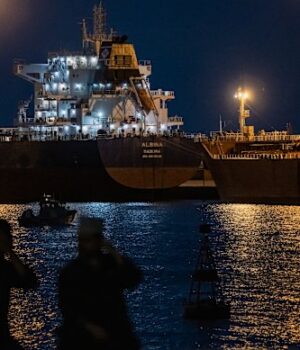
Iran’s ability to control the Strait of Hormuz will remain a central concern following the cessation of active hostilities. Unfettered access to this major artery of the global economy is crucial to the economic model of the resource-rich Gulf states, and continuing efforts by Iran to frustrate shipping in the strait would be unacceptable to the region’s leaders.
There have already been unverified reports that the Islamic Republic has been levying fees on shipping companies for safe passage. Some countries have continued to successfully export oil through the strait with Iran’s consent, among them China, Pakistan and, ironically, Iran itself, after Trump lifted sanctions on the regime in a failed attempt to stabilise oil markets.
Gargash has said Iran’s “bullying of the straits” is an existential concern for the Gulf, warning that “it is inconceivable that this aggression should turn into a permanent state of threat”. Abdulla went further, declaring that “the world will not allow Iran to hijack the Strait of Hormuz, and the path to that lies in liberating the UAE’s islands”.
This raises the spectre of conflict spreading not just to control of shipping through the Strait, but to territory itself, specifically the three small islands, Abu Musa and the Greater and Lesser Tunbs, seized by the Iranian navy in 1971 and claimed by the UAE. The Emiratis’ hardened stance toward Iran and the need to prevent Tehran from turning Hormuz into a permanent choke point – threatening decades of Gulf economic prosperity – might lead to the reignition of this historical territorial dispute.
Moritz says, ultimately, “the Gulf states desire stability over all else,” and that “they are not made secure by an unstable Iran”. The longer Iran entrenches its control over the Strait of Hormuz, the more likely it is that its Gulf Arab neighbours will abandon their longstanding instincts to deescalate. Even if Trump pulls out of the war tomorrow, he will leave behind tensions that could destabilise energy security and global trade for years to come.
Kylie Moore-Gilbert is a research fellow in Security Studies at Macquarie University and a regular columnist for The Age and The Sydney Morning Herald.
The Opinion newsletter is a weekly wrap of views that will challenge, champion and inform your own. Sign up here.
 Kylie Moore-Gilbert is a research fellow in Security Studies at Macquarie University and a regular columnist for The Age and The Sydney Morning Herald. She is the author of The Uncaged Sky: My 804 Days in an Iranian Prison.