
SOURCE :- THE AGE NEWS
London/Dubai: In the arid heart of the Arabian Peninsula, where scorching temperatures and negligible rainfall define the landscape, water is not merely a resource; it is the linchpin of survival.
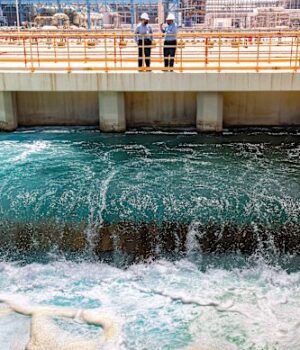
The six member states of the Gulf Co-operation Council (GCC) – Saudi Arabia, the United Arab Emirates, Kuwait, Bahrain, Qatar and Oman – rely overwhelmingly on desalination plants to quench their thirst. These facilities, which convert seawater into potable supplies, provide most of the drinking water for populations that have ballooned amid oil-driven prosperity.
Yet, as the conflict with Iran escalates, this infrastructure emerges as a glaring strategic vulnerability, potentially more important than the region’s oil and gas fields, refineries and export terminals.
Iran’s ability to strike the GCC’s desalination plants, whether with missiles, drones, small boat swarms or cyberattacks, poses an existential threat to these six Arab states. Unlike the GCC nations, Iran draws most of its water from rivers, reservoirs and aquifers, with desalination accounting for about 2 per cent of its supply.
While Tehran could endure disruptions to its limited desalination operations, the GCC states could face rapid societal collapse without theirs. Recent incidents, including alleged strikes on plants in Bahrain and Iran’s Qeshm Island, underscore how water, not petroleum, could become the decisive battleground in any prolonged conflict in the Gulf.
The GCC’s dependence on desalination is profound, reflecting each country’s geography and development trajectory. Saudi Arabia, the regional powerhouse, derives about 70 per cent of its drinking water from desalinated sources. In some cities, the figure is closer to 90 per cent.
The UAE, including the glitzy metropolitan areas of Dubai and Abu Dhabi, relies on desalination for about 42 per cent of its drinking water. Kuwait, hemmed in by desert and lacking significant natural freshwater, sources 90 per cent from these plants.
Bahrain, the smallest GCC member, depends on desalination for about 60 per cent, though some estimates push this to 95 per cent in urban areas.
Qatar, host to vast liquefied natural gas operations, draws between 75 and 90 per cent – effectively nearing total reliance in practice. Oman, with its rugged terrain, obtains roughly 86 per cent of its water from desalination. Collectively, the GCC produces 40 per cent of the world’s desalinated water, operating more than 400 plants that transform the saline Persian Gulf into a lifeline.
This vulnerability stems from decades of rapid urbanisation and industrial growth, fuelled by hydrocarbon wealth but constrained by nature’s parsimony. Groundwater reserves, once a buffer, are depleting at alarming rates due to over-extraction and climate change.
Desalination has filled the void, but it comes at a cost: the plants are energy-hungry behemoths, inextricably linked to the oil and gas sector. In the Gulf, many facilities are co-located with power stations, utilising steam from fossil-fuel combustion for dual-purpose operations. Saudi Arabia alone consumes about 300,000 barrels of oil daily to power its desalination efforts.
Technologies like multi-stage flash distillation and reverse osmosis dominate, with the former relying on thermal energy from gas-fired plants. This interdependence means that disruptions to energy infrastructure – already targeted in regional skirmishes – could cascade into water shortages.
In effect, the Gulf’s economic miracle rests on this fragile nexus: oil funds the desalination plants, gas powers them, and the resultant water supply sustains the workforce that extracts both.
Saudi Arabia exemplifies the stakes. As the world’s largest producer of desalinated water, it churns out about 11.5 million cubic metres a day, amounting to more than 4 billion cubic metres annually. Yet, without this capacity, the kingdom’s resilience is perilously thin.
Water emergency could trigger evacuation
Reserves and pipelines offer scant buffer; a 2008 US diplomatic assessment warned that Riyadh, home to millions, would need evacuation within a week if the Jubail plant – supplying the lion’s share of the capital’s water – were crippled.
Broader estimates suggest the entire country could survive only seven to 14 days on stored supplies before chaos ensued. To replace lost desalination output, Saudi Arabia would require staggering volumes of water imports: roughly 11.5 million cubic metres daily, or 4 billion cubic metres annually, assuming full substitution for drinking and municipal needs.
Sourcing such quantities via tankers or emergency pipelines from unaffected allies would strain global logistics, with costs soaring into the billions and the potential for humanitarian crises.
Iran’s strategic edge lies in its diversified water portfolio. Though facing its own shortages due to drought and mismanagement, Tehran relies on surface water and aquifers for the bulk of its supplies, with desalination playing a marginal role. This allows it to target GCC plants with relative impunity, knowing any reprisals would inflict minimal harm while prolonged water outages could empty cities and destabilise the GCC regimes.
Mitigation efforts are under way: GCC states are trying to diversify their water supplies with solar-powered plants and wastewater recycling, while investing in strategic storage reservoirs. Saudi Arabia’s national water strategy aims to boost wastewater reuse and cut per capita consumption. Yet, these efforts still have a long way to go and cannot reduce the vulnerability of the Saudis and their neighbours in the current war.
Water has been used as a weapon many times in the past. Following its 1990 invasion of Kuwait, Iraq flooded the Gulf with Kuwaiti oil to create the largest oil slick in history, which was over 10 times the size of the Exxon Valdez spill. The intent was to clog up and shut down the Saudi desalination plants.
Only the rapid intervention of the Saudi environmental authorities and the US Coast Guard prevented disaster. As the missiles fly, the Gulf’s leaders must once again confront this sobering reality: in a parched theatre of war, water’s scarcity could prove a deadlier risk than oil’s abundance.
David Rundell served as an American diplomat for 30 years. He is a former chief of mission at the American embassy in Saudi Arabia. Additional contributions by Michael Gfoeller, a former US diplomat and political adviser to US Central Command.
The Telegraph, London
Get a note directly from our foreign correspondents on what’s making headlines around the world. Sign up for our weekly What in the World newsletter.


