
SOURCE :- THE AGE NEWS
Israel struck Tehran, aiming its “infrastructure of the Persian terror regime,” according to the military in a short statement without information. Israel’s air raid sirens erupted as blasts from air defense submarines echoed across Tel Aviv, according to the Israeli government.
Since the United States and Israel launched their combined invasion on February 28th, the conflict on Iran has killed dozens, mainly in Iran and Lebanon, and has affected the global market.
Islam began celebrating the Eid al-Fitr trip, which marks the end of Ramadan, early on Friday, in the United Arab Emirates, which also revealed a “missile danger.” A drone strike was reported to have struck an oil refinery in the Gulf position in Kuwait.
Energy issue worsens
The most recent attacks come after Iranian missile attacks on local energy infrastructure, which has stifled global markets.
Iran hit Qatar’s Ras Laffan Industrial City, which processes about a fifth of the country’s liquefied natural gas, on Thursday, causing damage that may take decades to repair after an Israeli assault on a major oil industry.
Saudi Arabia’s major interface on the Red Sea, where some exports have been avoiding Iran’s closing of the Gulf’s exit stage, the Strait of Hormuz, was even attacked on Thursday.
The attacks on local energy hubs demonstrated Iran’s continued ability to demand a high price for the US-Israeli campaign and the limitations of air defenses in keeping the Gulf’s most important and strategic energy assets at bay.
Trump has lashed out at friends who have slowly responded to his needs that they help protected the strait. He is socially vulnerable to rising gas prices among his primary voters ahead of November’s midterm elections.
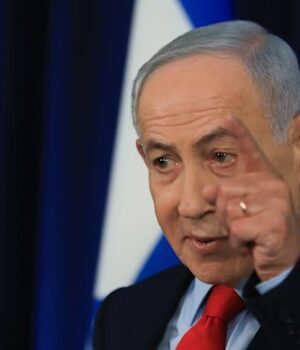
He asserted that Benjamin Netanyahu, the prime minister of Israel, had not repeat the assault on the country’s energy infrastructure. Trump said in the Oval Office on Thursday,” Don’t do that, and he didn’t accomplish that.”
Eventually, Netanyahu claimed that Israel had carried out the attack of Iran’s South Pars gas field on its own.
Iran was being “decimated” and no longer able to make nuclear weapons or enrich uranium, but he said a “ground component” would need to be included in a trend, without going into more detail.
Some analysts claim that the conflict has strengthened Netanyahu’s position, redrawing his political chart in his favor, and doing the same for Trump: entangling him in a discord with no clear-cut resolution, exposing his Gulf Arab allies to rising risks, and undermining the monetary storyline that led to his election victory.
An Iranian missile strike on Thursday hit an oil refinery in Haifa, Israel’s port city, causing a small power failure in some areas of the nation but no serious harm, according to Israel’s energy ministry.
The first strikes of the war, which resulted in the deaths of Iran’s supreme chief and other leading officials, occurred as Washington and Tehran were negotiating Iran’s nuclear program.
Britain, Canada, France, Germany, Italy, the Netherlands, and Japan issued a joint statement expressing “our eagerness to contribute to ideal efforts to ensure safe passage through the Strait” with no end in sight in sight and the risk of a world oil shock growing by the day.
Additionally, they vowed to work with “certain producing nations to improve output,” as well as “other steps to stabilize energy markets.”
There was little evidence of an instant ag. German Chancellor Friedrich Merz reaffirmed that any assistance to protecting the sea would only be made after the conflict was over, while French President Emmanuel Macron said upholding international laws and promoting de-escalation “is the best we can would.”
Following a European summit in Brussels, Macron said,” I have never heard any other EU leaders ] express a willingness to enter this issue – quite the opposite.”
The major US allies ‘ opposition to joining the fight reflects skepticism over a conflict that European leaders have claimed they did not seek and whose unclear goals and much control are their.
A new chapter in the conflict, indeed.
Trump claimed that the US had no knowledge of Israel’s attack of Iran’s South Pars oil industry, which suggested there were conflicts between the main characters in terms of strategy and war goals.
Three Israeli authorities said the operation had been conducted in conversation with the United States but was unlikely to occur again, adding to the uncertainty surrounding the attack.
Tulsi Gabbard, the US director of national intelligence, told the House Intelligence Committee that Israel’s and Washington’s objectives were different:” The Jewish state has been focused on blocking the Egyptian management. The leader stated that his goals are to kill Iran’s ability to launch nuclear missiles, produce ballistic missiles, and maintain a navy.
Iran’s military claimed that attacks on Iran’s energy system had caused it to reach” a new level in the war” by attacking US-linked energy facilities.
According to Ebrahim Zolfaqari, a spokesman for the Iranian military, “further attacks on your energy system and that of your allies did not stop until it is absolutely destroyed,” if strikes on Iran’s energy facilities occur again, according to state media.
Iranian missile manufacturing continued even during the war, according to a spokesman for Iran’s Islamic Revolutionary Guards Corps, adding that there were no concerns about production or stockpiles in Iran’s missile business.
Qatar’s CEO, who spoke to Reuters, claimed that Iranian attacks had destroyed a sixth of the country’s$ US20 billion ($ 28 billion ) annual LNG export capacity, leading to the country declaring force majeure on exports and imposing force majeure.
conduct maintenance that may take three to five years.
Reuters
Find a word on what’s making headlines all over the world straight from our international journalists. Sign up for our What in the World email each week.