
source : the age
Measles is circulating undetected in some Sydney communities, with several mystery infections emerging among young people who had no contact with confirmed cases or international hotspots.
In a fresh twist to Sydney’s rising measles risk, the highly contagious virus has been detected in four people whose infections could not be traced to known exposure sites and who had not recently travelled overseas.
Health authorities say the spike in locally acquired measles cases is due to people being unaware they are not fully immunised against the virus because of a change in the vaccination schedule in the 1990s, rather than anti-vaccination sentiment.
“From the 1960s to the early nineties, the recommendation was for babies to only receive one dose of the measles vaccine. What we now know is that two doses are the most effective in providing protection against the virus,” Dr Vicky Sheppeard, NSW Health’s executive director of health protection.
Of the four cases not linked to known cases or overseas travel, three do not have documented measles vaccinations, and the records for the fourth are pending, NSW Health said.
Thirty-three cases of vaccine-preventable measles have been confirmed since January 1, as NSW Health warns the state is on track to record its highest number of cases in a decade if local transmission cannot be contained.
An analysis of measles cases between January 2025 and March 7 found that none of the people who acquired the infection locally were documented as being fully vaccinated against measles.
“With the high number of measles cases in young adults, we are concerned [that] there are people travelling who don’t know that they aren’t fully immunised against the virus,” Sheppeard said.
Sheppeard encouraged everyone to check their vaccination status, particularly if travelling and people aged 20 to 35 years old.
The latest NSW Health measles alert issued Thursday evening warned people to watch for measles symptoms after confirmed cases visited several locations in western and northern Sydney while unknowingly infectious, including Northern Beaches Medical Centre, Nepean Hospital Emergency Department and a children’s ward, cafes, restaurants, a 7-Eleven and Coles supermarkets.
Health Protection NSW executive director Dr Christine Selvey directed people to the full list of locations on NSW Health’s website to check whether they had visited any during the exposure period. The locations do not pose an ongoing risk.
Up to one-third of people with measles will have serious complications, including middle-ear infection, diarrhoea and pneumonia. One in 1000 cases will develop encephalitis (swelling of the brain), and one in 100,000 will develop a fatal chronic, progressive brain inflammation called subacute sclerosing panencephalitis.
People most at risk of severe complications from measles are children under five years old who have not been vaccinated, adults who missed vaccinations, pregnant women and immunocompromised people.
Selvey urged everyone to make sure they were up-to-date with their vaccinations.
The MMR vaccine is free to children at 12 and 18 months of age, for anyone born after 1965 who hasn’t already had two doses.
Anyone unsure whether they have received two doses should get vaccinated, particularly if they plan to travel overseas, as additional doses are safe, NSW Health advises.
Australia was declared measles-free in 2014 and has retained this status due to high vaccination rates. Most cases in NSW have been due to overseas travel to regions, particularly South-East Asia, where the virus is endemic.
Several countries have lost their hard-won measles elimination status within the past six months, including Canada, the UK and Spain, due to persistent local transmission and sustained outbreaks. Measles is also threatening to become endemic in the US.
Children under 12 months can have an extra, early dose of MMR from six months of age if they are travelling overseas.
People born before 1965 probably developed natural immunity at a time when measles was widespread.
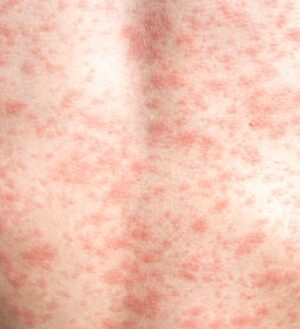
Measles symptoms can take up to 18 days to appear, and include fever, runny nose, sore eyes and a cough, usually followed three or four days later by a red, blotchy rash that spreads from the head to the rest of the body.
“If symptoms develop, and you’ve been at one of the locations at the time listed on the website, see your doctor or health service, including an emergency department,” Selvey said.
She advised people to call ahead and tell their medical centres that they may have come into contact with measles.
If it has been less than six days since the exposure at a listed location and you are pregnant, have a weakened immune system or have an infant who was exposed, you are advised to contact your local public health unit on 1300 066 055.
The Morning Edition newsletter is our guide to the day’s most important and interesting stories, analysis and insights. Sign up here.


