
SOURCE :- THE AGE NEWS
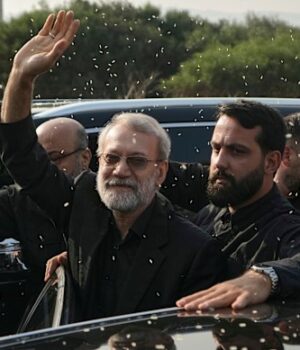
Iran’s top security official, Ali Larijani, had a reputation for being able to bridge the country’s hard-line military elements and more moderate political factions. His killing in an Israeli airstrike could open the way for Iran’s military to tighten its grip over the ruling system, analysts say.
Larijani, the head of the Supreme National Security Council of Iran, was the de facto leader of the country after US-Israeli airstrikes killed the upper echelons of government and the military early in the war. He was known to be trusted by Ayatollah Ali Khamenei, the supreme leader who was killed at the start of the US-Israeli campaign late last month.
Larijani’s responsibilities had grown steadily over the past few months, including overseeing the brutal crackdown on anti-government protesters in January. He also liaised with allies and neighbours, and prepared Iran for a military confrontation with the US.
Though he was a veteran conservative politician, Larijani had a reputation as a relative pragmatist within a system increasingly dominated by hardliners. Internally, he had pushed for a moderate supreme leader to replace Khamenei, The New York Times reported this week.
He lost that argument, however, and Mojtaba Khamenei, the ayatollah’s son, was chosen to replace his father.
A senior Iranian official said in a phone interview that he had received a call with the news that Larijani was killed. He described the mood among officials as one of deep shock and anxiety that Israel would not stop until all members of Iran’s leadership were killed and the Islamic Republic toppled. He spoke on condition of anonymity because he was not authorised to speak publicly.
In addition to Larijani, Israel also killed Brigadier General Gholamreza Soleimani, commander of the Basij, the plainclothes militia deployed by the government to repress demonstrations.
A member of the Revolutionary Guard, who was also not authorised to speak publicly, said killing Larijani and Soleimani would most likely only strengthen Iran’s hardliners to consolidate power and not concede to US President Donald Trump’s demands. He said that while he was angry and sad at hearing the news, it had made him more resolved to fight.
Referring to Larijani’s killing, “it means even further militarisation of the system”, said Hamidreza Azizi, an expert on Iranian security issues at the German Institute for International and Security Affairs, a research organisation. Larijani’s skills would have been essential for creating consensus among elites in the aftermath of the war, Azizi noted.
“Now that it seems everything is in the hands of the military elite, it’s very difficult to imagine how and if they can come up with some ideas, or if they can show enough flexibility, to accept the ideas of the other side to end the war,” he said.
“This process of elite-thinning – every layer that you remove, the next layer is going to be more hardline.”
Ali Alfoneh, a senior fellow at the Arab Gulf States Institute who has written an analysis of Larijani’s career, said that the killing would speed up “regime radicalisation” and lead to further entrenchment of Iran’s Revolutionary Guard, the country’s ideological military force.
“Israel is assassinating anyone who can negotiate with the US,” Alfoneh said in a series of text messages. “Their agenda is different than Trump’s. Only hard-line IRGC is left.”
In a statement about Larijani’s killing, the Israeli military said the death “constitutes a further blow to the Iranian regime’s abilities to manage and coordinate hostile activity against the state of Israel”.
Hatef Salehi, a conservative Iranian political analyst who is close to the government, described Larijani as the most important and capable interlocutor between Iran’s security and political leaderships.
His killing would “decrease the chances of finding a low-cost political solution to end the war,” Salehi wrote on social media.
Larijani’s killing elevates even further Mohammad Bagher Ghalibaf, the speaker of Iran’s parliament and a former Revolutionary Guard commander who serves as a link among Mojtaba Khamenei, the state bureaucracy and the Guard, said Saeid Golkar, a professor at the University of Tennessee at Chattanooga who studies Iran’s security forces.
“He’s going to continue the war,” Golkar said. “They believe they are going to create another Vietnam War for the United States.”
This article originally appeared in The New York Times.
Get a note directly from our foreign correspondents on what’s making headlines around the world. Sign up for our weekly What in the World newsletter.


