
SOURCE :- THE AGE NEWS
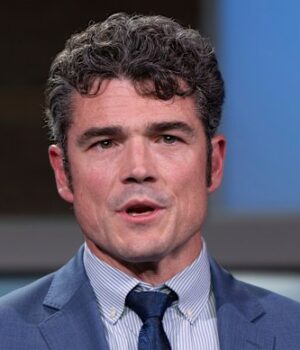
A certain Joe Kent, a complete unknown to most people until he resigned as director of Donald Trump’s National Counterterrorism Centre, briefly gave Trump-haters some solace as he scorched the earth on his way out.
The special forces veteran, appointed by Trump to the senior security post last year, alleged that the president of the United States was goaded into declaring war on Iran by “pressure from Israel and its powerful American lobby”.
Not only had Israel drawn the US into the 2003 Iraq war, said Kent, but its officials had quietly sown pro-war sentiment within the Trump administration to encourage the present conflict with Iran.
This resignation letter, dripping in conspiratorial antisemitic tropes, was rightly dismissed by the White House as “insulting and laughable”.
Taylor Budowich, a former White House deputy chief-of-staff, called Kent a “crazed egomaniac” who spent his time in office subverting the chain of command and undermining the president. “This isn’t some principled resignation – he just wanted to make a splash before getting canned,” Budowich said.
The problem for Trump, of course, is that he appointed this guy. Kent was drawn from the vast pool of far-right fringe dwellers, January 6 apologists and internet conspiracy theorists that make up parts of the America First movement. You reap what you sow.
[Trump’s response was classic, and internally contradictory: he said he didn’t know Kent very well, but he was a nice guy, except he was “very weak on security”. Odd choice for a counterterrorism chief, then.]
At the same time, the US president is mouthing off at allies for refusing his invitation to join the war against Iran. The reluctance of leaders such as Britain’s Keir Starmer and France’s Emmanuel Macron to send aircraft carriers to the Gulf has affirmed Trump’s suspicions that NATO is a “one-way street” in which the US can be relied upon to help (with Ukraine, for example) but not the other way around.
Sensitive to this, Ukraine’s Volodymyr Zelensky actually offered to help the US defend against Iran’s array of cheap drones – only to be rebuffed when Trump told Fox News Radio: “No, we don’t need their help in drone defence. We know about drones more than anybody.”
Such is the nature of Trump diplomacy. Allies are berated when they don’t offer to help, and belittled when they do.
Poor old Starmer has copped it most of all. “We have a tremendous, long-term relationship with the UK … [it] always was the best until Keir came along,” Trump said.
“I like him, he’s a nice man … but he doesn’t produce.”
In Australia’s case, the Albanese government says it has not been asked to help out in the Strait of Hormuz – and yet on Wednesday, Australia was still on the list of countries Trump saw fit to tell in no uncertain terms: we don’t need your help and “WE NEVER DID”.
It is a bit like the ostracised child in the schoolyard who, having been left out of every group, claims he never actually wanted to play anyway.
Trump ally Lindsey Graham, the pro-war Republican senator from South Carolina, says he spoke with the president on the matter on Tuesday (US time) and had “never heard him so angry in my life”.
“The arrogance of our allies to suggest that Iran with a nuclear weapon is of little concern and that military action to stop the ayatollah from acquiring a nuclear bomb is our problem, not theirs, is beyond offensive,” Graham said.
This attitude towards allies has permeated the Trump administration from day one. In some cases, it is rooted in justified gripes about inadequate defence spending – something Trump successfully cajoled NATO nations into starting to fix – and a long-standing sense that other countries are free-riding off US generosity.
But at other times, it manifests as cheap and nasty arrogance – such as Defence Secretary Pete Hegseth’s dig at allies who “clutch their pearls, hemming and hawing about the use of force”. Or worse, Trump’s claim that allied soldiers “stayed a little back, a little off the frontlines” in their deployment to Afghanistan.
After Hegseth’s remarks, I suggested that “the Trump administration may find out that, however righteous it believes its missions to be, it won’t be able to rely on support from friends who feel disrespected”.
Whatever he says now, Trump was asking for help – “demanding” it, as he said at one stage – and came up short. It’s for the administration to ponder what role its own approach may have played in that outcome.
As with Joe Kent, oftentimes, what goes around comes around.
Get a note directly from our foreign correspondents on what’s making headlines around the world. Sign up for our weekly What in the World newsletter.
 Michael Koziol is the North America correspondent for The Age and Sydney Morning Herald. He is a former Sydney editor, Sun-Herald deputy editor and a federal political reporter in Canberra.Connect via X or email.

