source : the age
Accused Bondi Beach terrorist Naveed Akram has hung his head after learning his mother and siblings are “under siege” and “living in fear” having been targeted with vigilante death threats and harassment after he allegedly murdered 15 people in Australia’s worst terror attack.
The targeting of the Akram family, who are not accused of any wrongdoing by police, emerged as part of a legal bid to suppress their identities. The move has been opposed by media including this masthead.
Akram, 24, allegedly opened fire on crowds of Jewish families at Chanukah by the Sea in mid-December alongside his father, Sajid.
Sajid, 50, was shot and killed by police. Naveed was badly injured but survived and is now in Goulburn Supermax prison charged with murder and terrorism.
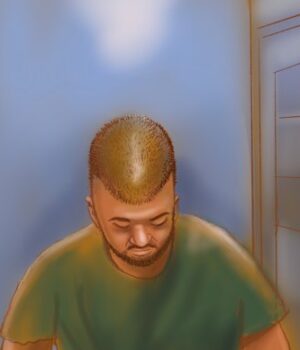
Akram appeared in the Downing Centre Local Court on Tuesday via videolink with a freshly shaved head, in a small grey and blue metal room.
His publicly funded barrister, Richard Wilson, asked Magistrate Hugh Donnelly to make final orders that would force media and the public to take down any information identifying Akram’s mother, brother and sister, or their home.
“(Akram) is charged with the most serious and the most notorious terrorist attack this country has ever seen,” Wilson acknowledged.
“The outpouring of public grief, outrage and anger at what he and his father allegedly did are unprecedented, extraordinary and absolutely understandable.
“But there is no suggestion his mother, brother or sister has anything to do with it.”
Akram’s legal team said his surviving family were “under siege” in their Bonnyrigg home in western Sydney, and the continued media attention kept them in the spotlight.
‘The outpouring of public grief, outrage and anger at what he and his father allegedly did are … absolutely understandable. But there is no suggestion his mother, brother or sister has anything to do with it.’
Naveed Akram’s barrister, Richard Wilson
Wilson said the threats began within 24 hours of Naveed’s alleged attack, when someone suggesting on social media people should “torch the house”.
Dozens expressed their support for the comment, the court heard.
Over the following weeks, people would call or message the family with threats and abuse; “die c— die” and “are you still alive?” among those aired on Tuesday.
Sometimes utes would drive past slowly with music turned up as occupants shouted more threats from behind tinted windows.
“C—s we are coming to kill you!” one group called after parking their ute across the Akrams’ driveway.
Earlier this year, a group of large men banged on the Akrams’ door late at night. The family watched them move down the side of the home and called police, but no one was caught.
Around that time, other people were heard inside the Akrams’ garage one night. They told neighbours they were “mechanics” who lived on the street. Police were called but again no one was found.
The following morning, Akram’s mother’s car wouldn’t start.
These are not the actions of “keyboard warriors”, Wilson said, but rather “misguided and dangerous people”, would-be vigilantes and those keen to exact revenge rather than wait for the slow grind of lawful justice.
The family’s “misfortune”, Wilson said, was being related to Australia’s worst accused terrorist.
Akram, on video, hung his head as his lawyer rattled off the various indignities visited on his family, hiding his eyes from the camera beaming him into the Downing Centre.
His brother had found a bottle of urine thrown in the front yard, and packets of pork chops thrown in the grass as well.
“We live in constant fear someone will harm us or set our house on fire. I fear for my life and the lives of my children,” Akram’s mother wrote in her court document.
“It has taken a significant emotional and physical toll on me.”
Barrister Matt Lewis, SC, acting for a group of media companies including this masthead, told the court it was “futile” to try and suppress the identities of the Akram family.
“This is an unusual case in that, shortly after attack, (Akram’s) driver’s licence photograph was posted on social media,” Lewis said.
“The cat is well and truly out of the bag.”
Further, Akram’s mother and brother had been the subject of extensive news reports already, including an interview with this masthead on the evening of the terror attack.
Akram’s mother said, in that interview mentioned in court, that she believed her husband and son were on a fishing trip down the South Coast of NSW.
That interview had been picked up by international publications, which the court had no power to constrain.
Suppression and non-publication orders only apply in Australia, and only local news outlets would be forced to take down images and information.
Lewis said open justice was crucial as the nation tried to come to terms with the horror of the attack, and the public had a right to scrutinise how the court treats the fallout.
“Open justice is known to provide a therapeutic effect to the community for raw emotion and hostility,” Lewis said.
“It is exceptionally important this process is given transparency and scrutiny to the nth degree.
“The public require confidence to know the worst terrorism in Australian history will be held to justice.”
The court will hand down its decision on the suppression bid on April 2.
Start the day with a summary of the day’s most important and interesting stories, analysis and insights. Sign up for our Morning Edition newsletter.