
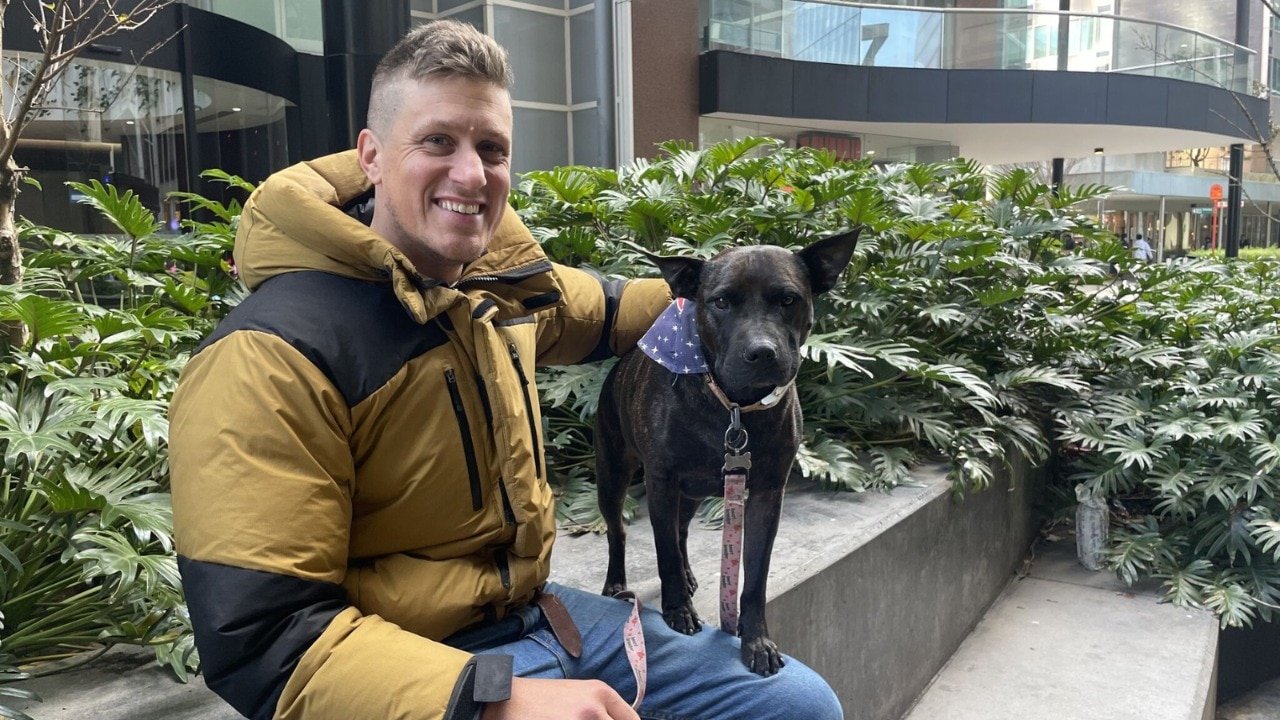
Source : INDIA TODAY NEWS
AI has a lot of uses. From writing code to automation via robots. But that is just a part of the picture. AI can even help cure cancer. According to Australian techie Paul Conyngham, ChatGPT and Google DeepMind’s AlphaFold allowed him to make custom vaccines that may cure cancer of his dog.
Paul said on Australian news programme Today, “When she was handed the sentence, I felt I had to do my part for her.”
advertisement
How did AI help cure cancer?
Conyngham had adopted a Staffy-Shar Pei cross, named Rosie, back in 2019 from an animal shelter. Five years later, the dog was diagnosed with cancer. After spending thousands of dollars on traditional treatment, such as chemotherapy, the tumour failed to shrink. This was the moment where Paul decided to take matters in his own hand, with the help of AI.
The Australian techie decided to sequence DNA of the dog to find the problem and build a cure. And to do this, he relied on ChatGPT. He told The Australian, “I went to ChatGPT and came up with a plan on how to do this.’’ Paul Conyngham is no stranger to AI, having worked in the field of machine learning and data analysis for 17 years.
He contacted The University of New South Wales Ramaciotti Centre for Genomics, which handed him the genomic sequencing for $3,000 Australian dollars (roughly Rs 2,00,000).
Conyngham then compared Rosie’s healthy DNA with the DNA of the tumour to find the problem. He explained, “It’s like having the original engine of your car and then a version of the engine 300,000km down the road – you can compare them and see where there’s damage.”
After this, Paul used AlphaFold, an AI system made by Google Deepmind that can help understand protein functions. This allowed the techie to identify the mutations and matched them to the drugs necessary to cure the tumour.
This allowed Paul and the UNSW to create a custom mRNA vaccine for the dog. An mRNA vaccine triggers an immune response by using a synthetic messenger RNA to instruct cells to produce a harmless viral protein.
Is this ethical?
Paul Conyngham did face a setback when it comes to regulations and approvals. He said that it took months to get the ethics approval to run a drug trial on Rosie. Paul added, “It took me three months, putting two hours aside every single night just typing up this 100-page document.”
Rosie received her first injection in December, followed by booster shots. The tumour has shrunk significantly following the doses, though the cancer was already at an advanced stage.
Conyngham added, remains realistic. “I’m under no illusion that this is a cure, but I do believe this treatment has bought Rosie significantly more time and quality of life.”
He is now working on a second vaccine to address a remaining tumour, stating, “There’s actually a chance that for some cancers, we can change it from being a terminal sentence to a manageable disease.”
– Ends
SOURCE :- TIMES OF INDIA