
Source : INDIA TODAY NEWS
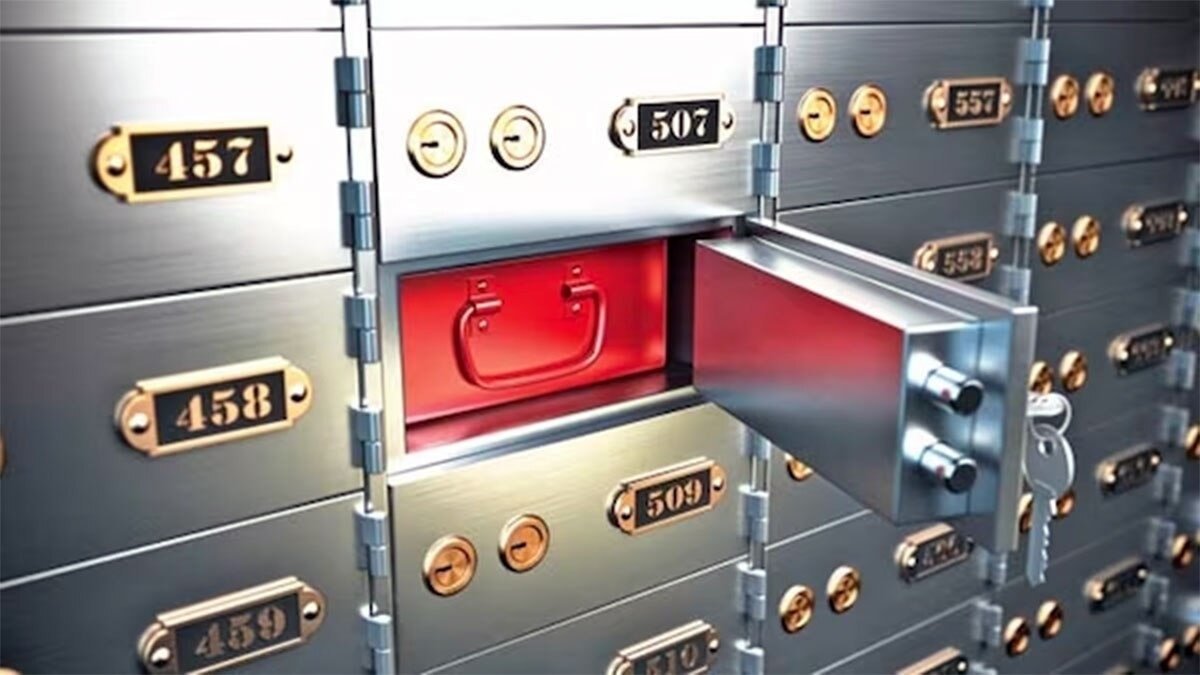
Bank lockers are widely seen as the safest place to store valuables such as gold jewellery, heirlooms and important family documents. The belief is simple: once valuables are placed inside a bank locker, they are fully protected.
But what many locker users do not realise is that the valuables inside those bank lockers are usually not insured at all.
Banks provide the locker facility, but they generally do not insure the contents kept inside them.
advertisement
“Valuables kept in bank lockers are not automatically insured,” said Shilpa Arora, co-founder and COO of Insurance Samadhan. “Banks only provide locker space and are generally not responsible for the contents, except in cases of proven negligence.”
That means if jewellery or valuables go missing, customers often have to rely on separate insurance policies to recover the full value.
This is the second story in Lock & Key, a series examining how India’s bank locker system works and what customers should know before trusting their valuables to a steel vault.
THE BIG INSURANCE GAP
Many bank locker users assume that banks will compensate them if valuables disappear.
But the protection banks provide is limited.
Abhishek Kumar, Sebi Registered Investment Adviser (RIA) and founder of Sahaj Money, said customers face a significant “coverage gap” if they do not insure valuables stored in lockers.
“Without insurance, one faces a significant coverage gap because banks are not legally responsible for the full market value of your stored items,” he said.
“If a loss occurs due to theft, fire or staff fraud, the bank’s payout is strictly limited to a multiple of the annual rent, which rarely covers high-value assets.”
Under RBI rules, a bank’s liability in cases of negligence is capped at 100 times the annual locker rent.
Kumar explained how limited that protection can be.
“For instance, if one pays an annual rent of Rs 3,000, the maximum compensation you can claim is Rs 3 lakh, even if the jewellery lost is worth Rs 50 lakh or more,” he said.
“As gold prices rise, this fixed cap becomes increasingly inadequate.”
CAN YOU INSURE VALUABLES KEPT IN LOCKERS?
While banks do not insure locker contents, insurance companies do offer policies that cover jewellery and other valuables.
“Yes, insurers offer jewellery insurance or valuable items insurance policies,” Arora said.
“These can cover jewellery kept at home, worn outside, or stored in bank lockers, depending on the policy terms and declarations made at the time of purchase.”
Such policies are designed to protect high-value personal assets against unexpected losses.
WHAT THESE POLICIES USUALLY COVER
Insurance policies for jewellery or valuables typically cover a range of risks.
“Typically, these policies cover theft, burglary, fire, accidental loss, and sometimes natural disasters,” Arora said.
Some policies even extend protection when jewellery is worn outside the home.
However, coverage details can vary between insurers and policy types.
HOW THE VALUE OF JEWELLERY IS DETERMINED
When buying insurance, the value of the items needs to be properly documented.
“The value is usually determined based on purchase invoices, valuation certificates from a certified jeweller, or periodic appraisal reports,” Arora said.
During a claim, insurers may reassess the value based on current market prices for gold, diamonds or gemstones and the policy conditions.
This documentation becomes critical when proving the value of lost items.
HOW MUCH DOES LOCKER INSURANCE COST?
Compared with the value of jewellery typically stored in lockers, insurance premiums are relatively small.
“Premiums typically range between 0.5% to 1% of the insured value annually,” Arora said.
“For jewellery worth Rs 10–20 lakh, the premium could roughly range from Rs 5,000 to Rs 20,000 per year.”
The exact premium depends on the coverage scope, security arrangements and risk profile.
THE FINE PRINT CUSTOMERS SHOULD KNOW
While jewellery insurance can offer protection, policies often come with conditions and exclusions.
Kumar said customers should carefully review the fine print before buying coverage.
“It is critical to check if the policy requires a valuation certificate from a certified appraiser, as claims may be rejected or undervalued without updated documentation,” he said.
Some policies also exclude certain types of losses.
“Common exclusions include mysterious disappearance where there is no evidence of a break-in, and damage caused by cleaning, restoration or wear and tear,” Kumar said.
Additionally, some policies may only cover jewellery while it is stored in the locker and not when it is temporarily kept at home.
WHAT HAPPENS IF ITEMS GO MISSING AND THERE IS NO INSURANCE
If valuables disappear from a locker and there is no insurance, customers still have some legal options.
Kumar said the first step is to file a complaint with the bank.
“A customer can file a formal complaint with the bank’s internal grievance cell and, if unsatisfied, escalate the matter to the Banking Ombudsman under the RBI’s Integrated Ombudsman Scheme,” he said.
Customers can also approach consumer courts if they believe the bank was negligent.
However, even successful cases often result in limited compensation.
“Even successful litigation often results only in the 100x rent compensation unless extraordinary negligence is proven,” Kumar said.
HOW FAMILIES CAN PROTECT THEIR VALUABLES
Experts say families storing high-value jewellery should think beyond just the locker.
Kumar suggested combining insurance with proper documentation.
“It is better to maintain a comprehensive jewellery insurance or all-risk policy that specifically includes a locker clause for high-value items,” he said.
He also advised keeping a digital inventory.
“One should supplement this by keeping a digital inventory with high-resolution photos and original purchase invoices to streamline the claims process.”
For investors, he also suggested considering alternatives.
“For long-term wealth, consider diversifying into gold ETFs, which provide the financial value of gold without the physical security risks or storage costs.”
Bank lockers remain one of the most common ways Indian families store jewellery and valuables.
But as experts point out, a locker alone does not guarantee financial protection.
Without insurance, the financial risk of losing high-value assets can fall largely on the customer.
Understanding how insurance works — and what it actually covers — may be just as important as the locker itself.
– Ends
SOURCE :- TIMES OF INDIA