source : the age
A five-minute check created by Queensland scientists could shorten the time it takes to diagnose and treat infertility, possibly reducing the number of years spent in severe pain and improving the fertility effects for thousands of women.
Endometriosis causes episodes of serious, frequently terrible pain in other areas of the body similar to the uterine inner lining.
It takes on typical six to eight years for the state to be identified, despite the fact that one in seven American women are affected by it.
The Simplified Adolescent Factors for Endometriosis ( SAFE ) score, a study from the University of Queensland, uses six questions to identify girls and young women at risk of endometriosis and facilitate their referral to specialists for further analysis using data from more than 9000 women.
According to our study, the majority of women are diagnosed in their late 20s or early to try to become pregnant, Mishra said.
Early detection is crucial because it can affect the treatment of fertility problems afterward.
A previous study on the effects of endometriosis on Australia’s medical system found that women who had the state experienced serious pelvic pain, infertility problems, irritable bowel syndrome, or other mental health issues.
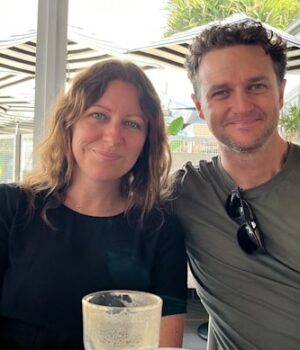
Infertility was discovered in Brisbane female Amy Wilson last year at the age of 41.
When she was 34 centuries old, after having children and stopping prevention, she started experiencing symptoms like stress and swelling around her hips.
When I woke up one morning, Wilson said,” I don’t walk, I couldn’t feel my legs, and I don’t think my pelvis.”
” I experienced two or three such bouts in less than three times.”
Wilson has sought medical advice from a variety of specialists over the years, but none of them have been able to resolve her ailments. She also experienced bouts of depression and stress as a result.
She said,” When indicators hit me, I would be very disappointed in myself that I wasn’t raising my children and being a better parent.”
It affected me in daily life, and I stopped looking for fun.
After a physical examination, Wilson was gradually referred to a gynecologist who made the diagnosis of adenomyosis. Endometriosis, with cell found around her colon, was later confirmed by exploratory surgery.
The mother-of-three had surgery last year to remove her fallopian tube and excessive cells, and an IUD was implanted to help control symptoms.
Although it didn’t have an impact on her reproduction, she claimed that the SAFE test “massively” altered her endometriosis journey.
” I have three girls. I don’t want them to feel as though they didn’t find a solution for seven years of their lives,” Wilson said.
The SAFE report uses a point-based system. The higher a person’s index and the greater probability of the problem are the more risk factors identified.
Mishra stated that the investigation will then look at how the device will be evaluated in clinical settings now that it has been published.
Start the day with a summary of the week most significant and fascinating tales, analyses, and perspectives. Sign up for the magazine for the day.