
source : the age
Confidential testing triggered by a deadly cluster of fungal infections on a Sydney transplant ward found widespread mould and water damage on at least four floors of the hospital, as new documents reveal mould growing in at least five other major health facilities across the state.
Two people died and another four became seriously ill in a cluster of fungal infections among patients at the Royal Prince Alfred (RPA) transplant unit in Camperdown between October and December, the Herald revealed on Thursday.
A preliminary assessment found invasive fungal infection was a “causative factor” in the deaths of the two patients.
The hospital said it was investigating the possibility the cluster could be caused by Aspergillus mould disturbed by construction on the facility’s $940 million redevelopment.
But the findings of environmental testing, completed last month and made public through a parliamentary call for papers, found extensive mould on four floors of the hospital that was unlikely to be related to the construction site.
The survey found high mould spore concentrations in the hospital’s auditorium, ambulance drop-off area, and early pregnancy assessment service. The type of mould discovered inside the hospital, Aspergillus/Penicillium, was associated with water damage caused by heavy rain, the report said.
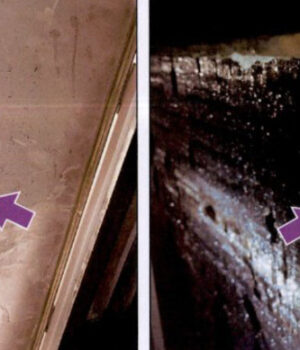
Photos attached to the report showed visible mould growing inside plant rooms on levels four and 10 of the hospital. The survey also found mould in ceiling vents in the post-natal and staff areas.
Opposition health spokeswoman Sarah Mitchell described the pictures as “disturbing”.
“The staff, patients and families of those who lost their lives deserve transparency,” Mitchell said.
Health Minister Ryan Park on Friday said there was “no cover-up” when asked why the government did not to inform the public of the cluster for two months.
“We were telling hundreds of people … cleaners, orderlies, clinical staff, nursing staff, outpatients, patients,” he said.
Park said NSW Health had to strike a balance between informing the people most impacted, “versus not unnecessarily causing concern in the community about people going to one of the country’s largest and most preeminent hospitals”.
Parliamentary documents requested by Mitchell’s office revealed further mould issues at Cumberland, Wyong, Ryde, and John Hunter hospitals.
Park said many of NSW’s 4000 hospital buildings were ageing, and recent heavy rain had contributed to mould issues across the state.
“When it’s identified, we try and get that removed as quickly and as effectively as possible,” he said.
Sydney Local Health District chief executive Deb Willcox said the $940 million redevelopment would address many of the ventilation and water damage issues leading to mould growth at RPA.
“This will happen from time to time in ageing buildings,” she said.
“It is unfortunate, but I’m very confident from the air sampling and the work that we’ve done that the hospital is absolutely safe.”
What is Aspergillus mould?
Aspergillus is a family of moulds found almost everywhere.
“It makes a huge number of spores. It lives in soil, it lives in decaying vegetation. It’s ubiquitous,” said Professor Dee Carter, a fungal infections expert at the University of Sydney.
“If you sampled just the air in front of you right now, you no doubt find that there were some spores there.”
Aspergillus fumigatus – derived from the latin word for smoke – is the particular strain most commonly associated with fungal infections in humans, Carter said.
“If you turn over a pile of compost, you might see what looks like a puff of smoke, and it’s actually a whole bunch of spores being released,” she said.
How are fungal infections contracted?
Aspergillus can only enter the body when it is inhaled into the lungs.
It is hydrophobic, meaning it tends to repel water, enabling it to “penetrate deep into the lungs”, Carter said.
Why is it so dangerous?
For the vast majority of people, these spores are harmless. The immune system is effective at clearing out the fungus before it can cause problems.
But for transplant patients, who are on a number of immune-suppressing drugs to prevent the body from rejecting a new organ, these spores can cause serious problems.
“If you don’t have a good immune system, that’s when it can lodge in the lungs, and then it can start to grow and cause trouble,” Carter said.
These filaments can penetrate cells and blood vessels, reaching deep into the lungs.
“It’s a really terrible, horrible disease, and pretty hard to treat once it gets started,” Carter said.
Mortality rates – even with the best available antifungal treatments – can still be as high as 80 per cent.
The Morning Edition newsletter is our guide to the day’s most important and interesting stories, analysis and insights. Sign up here.
 Angus Thomson is a reporter covering health at The Sydney Morning Herald.Connect via X or email.

