
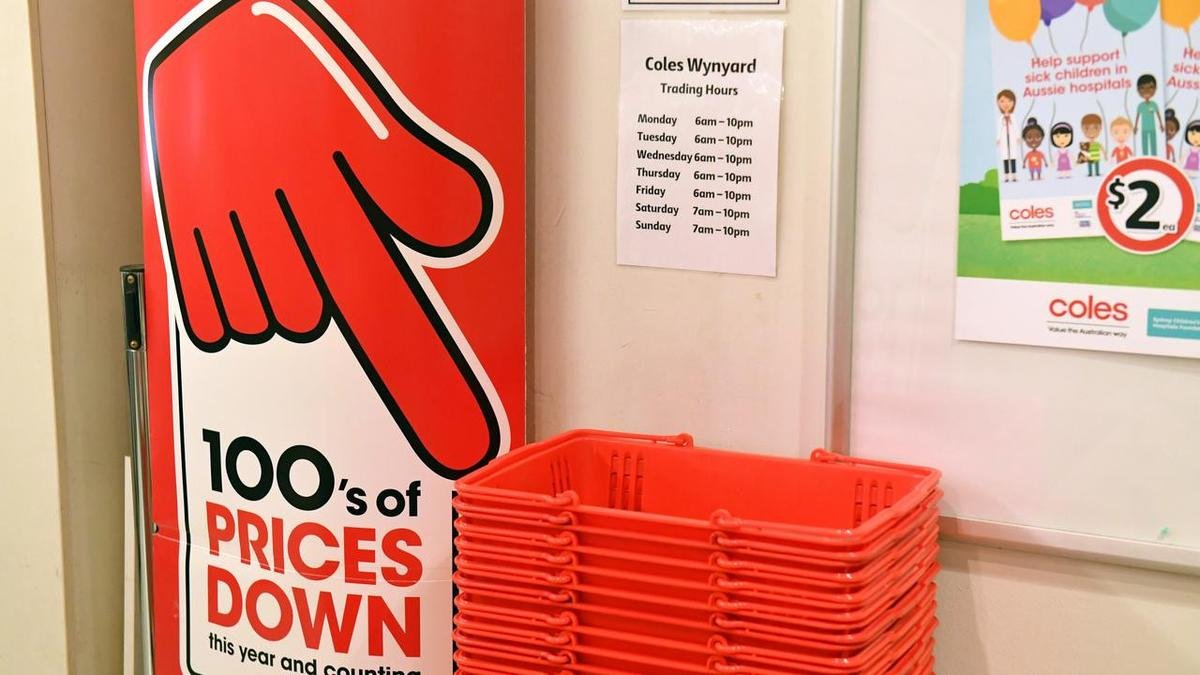
Source : Perth Now news
A supermarket giant effectively misled shoppers with a catchy slogan that was “not just some meaningless phrase”, a court has heard.
In its closing submissions to the Federal Court, the Australian Competition and Consumer Commission argued Coles intentionally duped customers with its “down down” campaign, first launched in 2010.
Garry Rich SC, for the commission, said the campaign was a tactic to deceive consumers that prices on thousands of products were falling when in fact they were going up overall.
In one example cited by Mr Rich, the price of a jar of Coles-brand quince paste was raised to $4.50 from $3 for four weeks before being reduced to $3.15.
Mr Rich argued that four weeks was not a genuine establishment period for $4.50 to be legitimately considered the regular price.
“When consumers hear the words ‘down down’ they don’t think that’s a meaningless phrase,” he told Justice Michael O’Bryan.
“They think it means something and what they think it means is that the price of this product has gone down.”
Coles had defended its discount campaign in court, saying grocery shoppers understood they represented “fair dinkum” price reductions.
The retail giant argued its “down down” prices were genuine discounts for shoppers after an increase in wholesale costs during a post-COVID inflation surge.
In his summary, Mr Rich painted a picture of the average consumer, saying that grocery shopping was a chore for most.
“There must be very few people who shop for groceries for fun,” he said.
Customers were often in a hurry, shopping for many different products on the same visit, Mr Rich added.
“Many are travelling through the aisles of Coles with children in tow, perhaps hanging off the trolley begging for ice cream,” he said.
“They see a big red and white ticket and read that the price is ‘down down’ … many of them will have no idea that the price was actually lower four weeks ago.”
Justice O’Bryan queried whether time-poor consumers might take the meaning of “down down” to be simply a generic statement for prices as a whole.
But Mr Rich countered by saying that “down down” immediately implied there used to be a higher price.
Competitive pressures between Coles and Woolworths had created an ethical race to the bottom between the supermarket duopoly, he said.
“The better standard, if one is going to use Coles’ standards as a guide, is what did they think was appropriate in circumstances where they weren’t fighting tooth and nail with Woolworths, where they weren’t concerned that Woolworths had thrown out the rule book,” he said.
The commission alleges the supermarket giant deliberately raised prices on thousands of everyday items before offering discounts at prices higher or equal to the original shelf price throughout a period of 15 months.
The case continues.


