
source : the age
Fellow students competing to shout “terrorism” the loudest at a Palestinian student, being told Indigenous people should be “rounded up and shot” by a placement supervisor, “jokes” about slanty eyes and people screaming “send them to the camps” at groups of Jewish students: these are the experiences of Australian university students over the past two years, according to a landmark study.
Racism@Uni – the first national study of its kind – concluded that racism is “pervasive” across the country’s 43 universities. Taking in the views of 47,000 students and 28,000 staff, the study was commissioned by the federal government in 2024 and undertaken by the Australian Human Rights Commission.
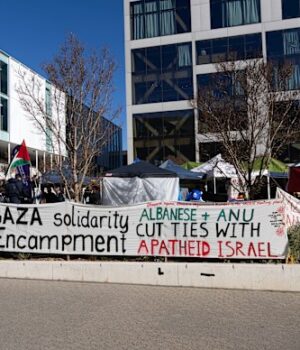
The situation on campus worsens with external events, the report said, with First Nations students and staff seeing more racism during the failed referendum on the Voice, Asian students experiencing a spike during the COVID-19 pandemic, and antisemitic, Islamophobic, anti-Palestinian, anti-Arab and anti-Middle Eastern sentiment reaching new heights since the Israel-Hamas war began more than two years ago.
“Jewish, Israeli, Palestinian, Muslim and Middle Eastern staff and students have endured significantly heightened hostility,” the report said.
“I’d encountered antisemitism before, but I had never been scared to be Jewish. In uni, I frequently feel the need to hide my religion,” one student said.
respondents experience indirect
racism.Peter Braig
“Many university staff are promulgating antisemitic attitudes and ideas in the classroom. I constantly hear tropes to do with money, power, control, bloodthirstiness and other antisemitic ideas in classrooms, and staff meetings,” a staff member said.
Of Jewish students and staff, 89.1 per cent said they had experienced direct or indirect racism, as did 80.6 per cent of Middle Eastern respondents, 76.3 per cent of Muslim respondents and 90.2 per cent of Palestinian respondents.
The terms of reference define indirect racism as “racist behaviour directed at others from the same racial, ethnic, cultural and/or religious group they identify with”, while direct racism is a personal experience of racist behaviour.
Middle Eastern staff and students described a pattern of intimidation from campus security, including being followed, surveillance of their social media, and security asking for identification.
The findings were completed before the December massacre at Bondi Beach that targeted a Jewish festival, in which 15 people were killed.
“The commission also recognises that such incidents of violence impacts on the broader community and are often accompanied by a heightened risk of racism and vilification … towards all communities that experience racism,” the report noted.
The conflict in the Middle East has had a significant effect on freedom of expression on Australian campuses.
A large proportion of Jewish students – 93.7 per cent of religious Jewish students and 81.1 per cent of secular Jewish students – felt they were unable to express their views on campus. Staff felt similarly – 84.6 per cent of religious Jews and 85.9 per cent of secular Jews said the same.
Similarly, 70 per cent of Middle Eastern respondents felt they could not express their views and 70 per cent of Muslim staff felt they could not express their views. Palestinian students (86 per cent) and staff (84 per cent) felt the same.
All Palestinian students to whom it applied said they did not express views because of the potential impact on their right to stay in Australia, and 90 per cent of Palestinian respondents said they had experienced racism.
Seventy per cent of the study’s respondents had experienced direct or indirect racism, including three in four international students experiencing indirect racism, and one in five academics experiencing direct interpersonal racism.
The report’s sweeping recommendations included establishing a sector-wide framework, annual independent reviews, development of specific anti-racism strategies and a strengthened complaints process.
Federal Education Minister Jason Clare said the government would consider the recommendations.
Race Discrimination Commissioner Giridharan Sivaraman said: “The insights and data from this study highlight that racism at university is not confined to isolated incidents or individual behaviour – it is systemic. Racism is pervasive across the sector.”
Correction: A previous version of this story stated 85 per cent of religious Jewish staff and 86 per cent of secular Jewish staff had been physically harrassed, threatened or assaulted due to an error in the report. The actual number is 10 per cent of religious staff and 3 per cent of secular staff.
Our Breaking News Alert will notify you of significant breaking news when it happens. Get it here.
CORRECTION
A previous version of this story stated 85 per cent of religious Jewish staff and 86 per cent of secular Jewish staff had been physically harassed, threatened or assaulted due to an error in the report. The actual number is 10 per cent of religious staff and 3 per cent of secular staff.