
source : the age
A plan to boost Sydney’s 24-hour economy has hit a major obstacle, with the NSW government scaling back plans for around-the-clock trading at a new $100 million inner-city cultural venue after the proposal sparked a wave of community objections over late-night noise.
The NSW government has walked back a contentious trading plan for The Cutaway cultural hub in Barangaroo after the site was earmarked for 24/7 operations as part of broader push by Premier Chris Minns to “bring Sydney back to life”.
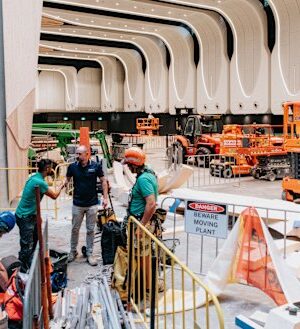
When completed this year, The Cutaway will include multiple event spaces carved into the headland beneath Barangaroo Reserve, with room to host large art installations, performances, festivals, concerts, gala dinners, fashion shows and events including Vivid Sydney.
But less than a year after the 24/7 operating hours were proposed, those plans have been scaled back, with most events to be capped at midnight, with limited exceptions for major occasions such as New Year’s Eve.
Originally, Placemaking NSW, the government agency overseeing the development, argued that 24-hour operations would advance the state’s vision to boost nightlife, tourism and Sydney’s global standing.
The venue’s location next to Barangaroo Metro station was cited as a major advantage, allowing for extended trading supported by improved public transport access.
The proposal quickly drew objections from residents of high-rise towers and community groups in Barangaroo and Millers Point. Concern centred on the cumulative impacts of late-night events, particularly noise, crowd control and disruption to residential amenity.
Anne Crabb, president of the Millers Point Community Resident Action Group, said the scale and design of the venue heightened those fears.
“Unlike current 24/7 venues such as The Crown casino and The Star, this is a huge and open cavernous space located on the harbourfront,” she said.
“Barangaroo can and should be a vibrant cultural precinct, but this must not come at the expense of our long-standing residential community who will have to deal with the late-night impacts.”
Resident Rosalind Lehane said uninterrupted sleep would be jeopardised under a 24-hour trading model.
“The proposed changes to The Cutaway of 24-hour noise and vibration are incompatible with this aim,” she said.
Strata representatives from neighbouring towers also raised concerns about the venue’s acoustic design. Strata managing agent Kate Maclachlan warned that the semi-enclosed structure could amplify sound and create “reverberation” impacts.
In a submission to the NSW government, Robert Spears claimed noise levels could be comparable to a “Formula One grand prix race”.
“If you wanted to devise a scheme to make our city less liveable than it already is, then you would come up with this new Cutaway proposal,” he wrote.
In response to what planning documents described as “strong concerns”, Placemaking NSW has scaled back the operating hours to 8am to midnight. Some noise controls will be applied from 10pm.
Event patrons will be directed toward Barangaroo and Wynyard Walk, rather than through residential streets in Millers Point, and integrated ticketing will be encouraged to promote use of the metro.
Business Sydney executive director Paul Nicolau described the decision to wind back the 24-hour operations as “disappointing”, arguing the city needed more late-night venues to counter the lingering effects of the pandemic and increased working from home.
“If you choose to live in Barangaroo – in the heart of a global city – a level of noise should be expected,” he said.
“We desperately need to ensure there are enough venues and facilities that are open 24/7.
“The venue could have hosted overnight concerts, creative events or live broadcasts of international sporting competitions. At the very least we should have given it a trial.”
He said expanding public transport to 24-hour operations could have also supported the safe dispersal of late-night crowds.
NSW 24-Hour Economy Commissioner Michael Rodrigues had supported the original operating hours, saying extended trading would facilitate a diverse range of events and encourage tourism.
In revised plans, Placemaking NSW said the midnight finishing times would provide “a more clearly defined and constrained operating regime that balances the role of The Cutaway as a thriving, unique and industry-leading cultural venue with the need to protect the amenity of surrounding residential areas.”
A spokeswoman said operations would begin with a three-month trial and that trading hours “may be further relaxed to support what Sydneysiders and visitors are seeking”. The changes remain subject to final approval from the NSW Department of Planning.
The NSW government is taking steps to enhance the nighttime economy through reforms that have included simplified noise regulations, support for outdoor events and improvements to liquor licensing.
Construction of The Cutaway is more than 85 per cent complete and the first events are expected to start by July.
Start the day with a summary of the day’s most important and interesting stories, analysis and insights. Sign up for our Morning Edition newsletter.
 David Barwell is an urban affairs reporter for The Sydney Morning HeraldConnect via email.