
source : the age
Frustrated health workers say their peers have become part-time “Uber drivers” ferrying patients to and from Melbourne because pockets of Victoria do not have dedicated adult detox facilities, sparking calls for an overhaul in the regions.
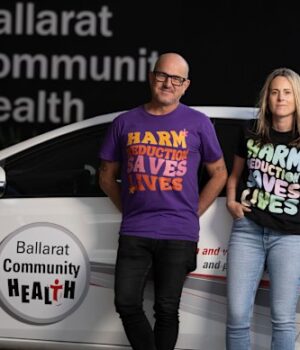
Ballarat Community Health staff say they clocked up more than 8000 kilometres and at least 110 hours driving clients back and forth between the regional city and detox facilities in Melbourne, Geelong and Bendigo late last year.
The trips – the equivalent of almost three weeks’ worth of patient outreach and care – were recorded in the three months leading up to Christmas.
The driving was mostly done by specialist nurses trained to provide in-home or community-based care for Victorians withdrawing from alcohol and other drugs.
Ballarat Community Health clinic lead for alcohol and other drugs Mel Lishman said staff spent a lot of time driving clients to services in Melbourne, Geelong and Bendigo because the region did not have a dedicated detox facility for adults.
“Some facilities have specific admission times. And so, for example, one of our nurses this morning left at seven o’clock. She doesn’t usually start until nine, but she had to start or leave here at seven o’clock to pick up a client from Daylesford to get them to Melbourne for a 10 o’clock admission.”
Detox and rehabilitation are two separate, but sequential, phases of recovery from drug or alcohol use.
Detox refers to the short-term medical process of clearing substances from the body and safely managing withdrawal symptoms. It typically lasts three to 10 days.
Rehab follows detox and is focused on longer-term therapy that addresses the root causes of addiction and helps prevent relapse.
Ballarat does have a rehab clinic, but its detox service, Tabor House, is for young people aged 12 to 25.
Ballarat Community Health manager Suzanne Powell, who has worked in this space for 18 years, said detox had been an issue since she started.
“We have raised this issue a lot but we don’t seem to get anywhere,” she said.
“From a funding perspective, it would be more sustainable to have appropriate resources to undertake this [transport] work to reduce the amount of time our NRW [non-residential withdrawal] nurses are spending in the car.”
In community health, residential withdrawal refers to staying at a facility with 24/7 medical supervision. Non-residential withdrawal is done at home or via an outpatient service for more mild dependency.
Ballarat peer support worker Dean Seabrook said alcohol continued to be the most commonly used drug in the region, but cannabis was common, too.
There had also been an increase in the usage of GHB, also known as liquid ecstasy.
“It’s reported by clients that methamphetamine purity is very low at the moment. It’s getting cut with things, so clients aren’t getting that buzz. So they’re using other things as well.”
Chris Christoforou, the chief executive of the Victorian Alcohol and Drug Association, said there had been a general increase in demand for detox services across the state.
“It’s an important part of preparing people for rehabilitation. Often it’s a first step when there’s quite problematic alcohol or other drug use that poses a significant health risk to the individual. So being able to manage that properly as part of a supported withdrawal process is critical,” he said.
“The issue of access to detox beds or withdrawal beds is a major issue, and certainly a major issue for regional communities.”
Christoforou said being able to access support networks was an essential part of treatment success.
“People need services in their communities. Ballarat isn’t exactly a small town. It’s one of the biggest population centres in Victoria.”
Mel Thomson, the chief operating officer at Windana – which runs longer-term rehabilitation services in Ballarat, Geelong and Maryknoll – said all services transported patients, but the burden was higher in the regions.
“It’s an incredible waste of resources. They’re not Uber drivers,” she said of nursing staff. “But they do it because there isn’t an alternative that’s safe or funded.”
Thomson said she would welcome an adult detox centre in Ballarat but in an ideal world, there would be medical detox beds in every major community.
“Why does every major hospital and community health service not have medical detox beds available? This is a health issue.”
Windana also offers home-based withdrawal services for suitable clients around the south-eastern suburbs, Frankston and the Mornington Peninsula. Patients are connected to a nurse and local GP who prescribe the necessary medications.
Thomson said this was an area the government could also invest in. However, she pointed out that home-based withdrawal was unsuitable in some cases, such as Victorians consuming larger quantities of drugs or alcohol, or those at risk of homelessness.
Victorians will head to the polls for a state election in November. Aside from violence against women, the Coalition is expected to campaign hard on better access to healthcare in the regions, according to two sources speaking on the condition of anonymity to anticipate plans not yet finalised.
A spokesperson for the Allan government said that while Ballarat locals had access to specialist alcohol and drug services, more could be done.
“That’s why we’re delivering our $95 million statewide action plan to save lives, reduce drug harms and get Victorians the care they need.”
Start the day with a summary of the day’s most important and interesting stories, analysis and insights. Sign up for our Morning Edition newsletter.
 Broede Carmody is a health reporter for The Age. Previously, he was a state political reporter for The Age and the national news blogger for The Age and The Sydney Morning Herald.Connect via X or email.

