

SOURCE :- SIASAT NEWS
New Delhi: Prime Minister Narendra Modi on Friday, February 13, inaugurated the Seva Teerth complex, which will house the Prime Minister’s Office (PMO), the National Security Council Secretariat and the Cabinet Secretariat.
Modi unveiled the plaque of Seva Teerth at the new complex — the name inscribed in Devanagari script on the wall of the complex. Below it is the motto ‘Nagrik Devo Bhava’ (citizen is akin to God).
The PMO will shift from the South Block on Raisina Hill to Seva Teerth, bringing together the offices of the Cabinet Secretariat and the National Security Council Secretariat that were located at different places.
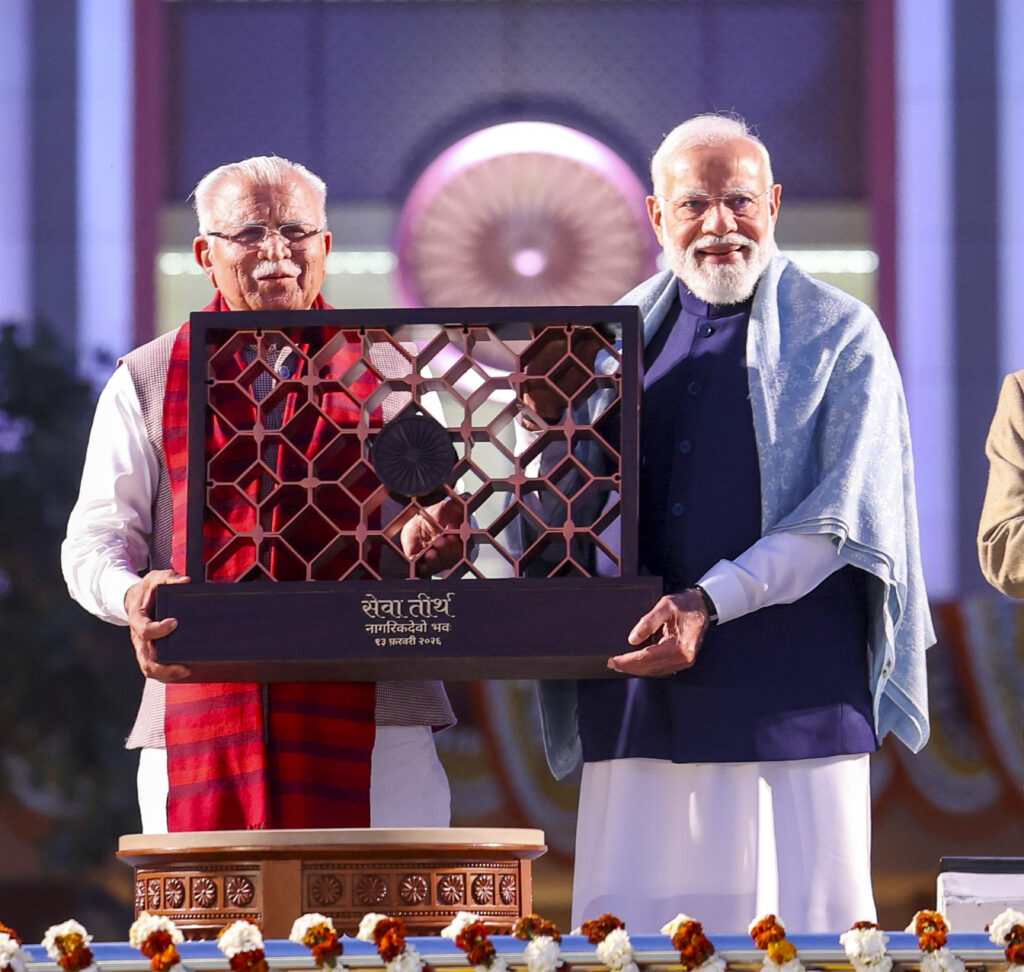
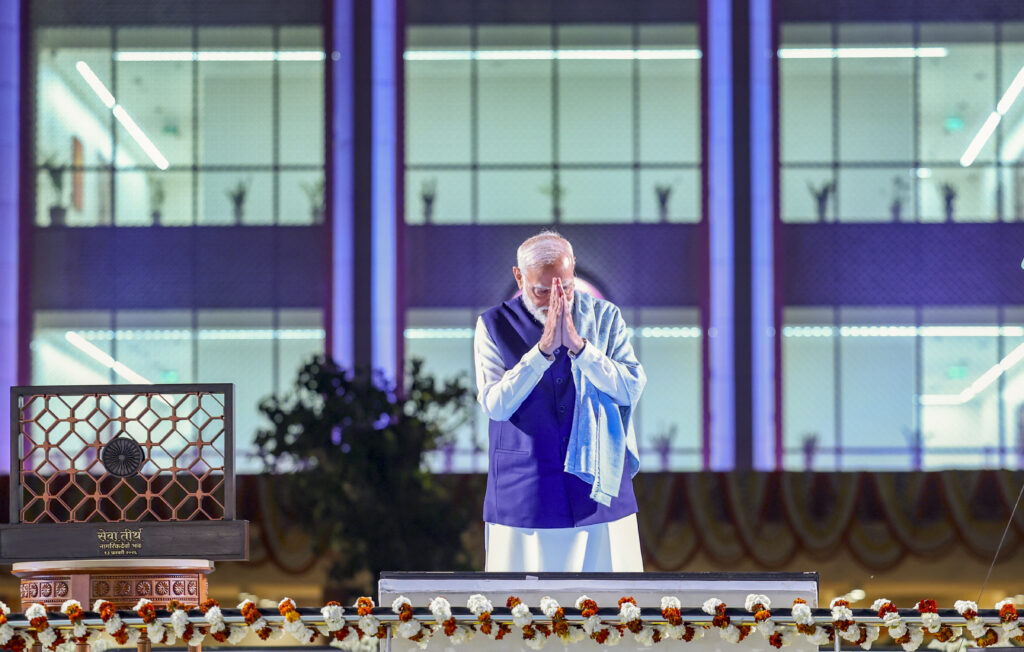
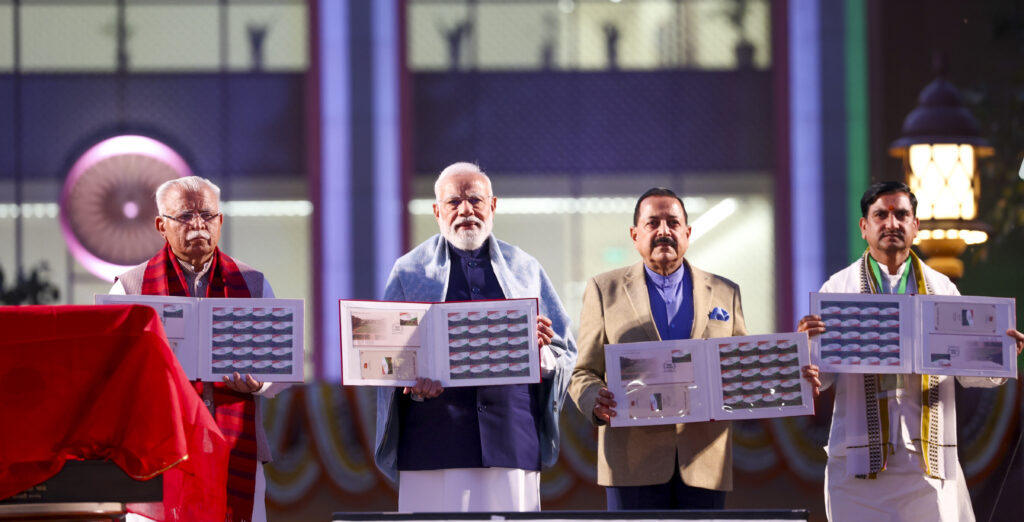
Housing and Urban Affairs Minister Manohar Lal, Minister of State in the PMO Jitendra Singh, and officials from the PMO were present on the occasion when Modi inaugurated the new building.
Since 2014, the Modi government has taken steady steps to move away from symbols of India‘s colonial past and to usher a shift in mindset, officials said.
They pointed out that the Prime Minister’s Office will now be called Seva Teerth, the Central Secretariat buildings have been named as Kartavya Bhawan, and Rajpath has been renamed as Kartavya Path.

In the same spirit, Race Course Road, where the prime minister’s official residence is located, has been renamed as Lok Kalyan Marg and Raj Bhawans and Raj Niwas have been renamed as Lok Bhavan and Lok Niwas, respectively.
“The inauguration marks a transformative milestone in India’s administrative governance architecture and reflects the Prime Minister’s commitment to building a modern, efficient, accessible and citizen-centric governance ecosystem, a statement from the PMO said on Thursday.
For decades, several key government offices and ministries functioned from fragmented and ageing infrastructure spread across multiple locations in the Central Vista area.
This dispersion led to operational inefficiencies, coordination challenges, escalating maintenance costs and sub-optimal working environments. The new building complexes address these issues by consolidating administrative functions within modern, future-ready facilities, it said.
SOURCE : SIASAT