
Source : THE AGE NEWS
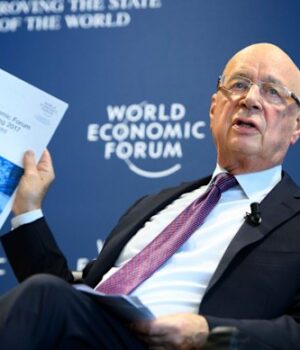
Klaus Schwab, the creator and magician of the circus, was arguably the only person who had attended every meeting of the world’s wealthy in Davos up until last year.
But last month, as 3000 politicians and business chiefs gathered for the annual World Economic Forum ( WEF ) summit, Schwab was conspicuous only for his absence. He spent time in Oman’s hills on vacation.
The 87-year-old was just watch from a distance as the present went on without him after being severely stifled out of the agenda-setting European university he founded in 1971, next April.
And what he saw made him incredibly uneasy.
Davos 2026 was” a one-sided social platform”, he says, “presenting very much the American point of view”.
Schwab has always been the balm minister, and he’s always willing to talk to almost anyone.
It’s a remarkable admission that Davos this year left him uneasy, and it’s interesting to hear how his typically red liberal rhetoric has become more polarized.
His priority was kindled by Donald Trump, the US senator, visiting Davos for the first time since 2020 alongside a legion of his clerks. According to Schwab, Davos was a jerk church created by the Americans.
He acknowledges that his design has always been at risk of becoming” an sound room.” But this year it felt like there was only one voice in that room, and it wasn’t a democratic one.
Sometimes this wasn’t a bad item. You may argue that Davos provided participants with a fantastic opportunity to be directly exposed to this point of view, he claims.
Schwab claims that the White House’s” America first” strategy is” a wake-up call” for both Britain and Europe. Trump’s strong love means Europeans face a decision between becoming a stronger position or a vassal state.
A relationship did work very well if it is more or less equal, because you must truly unite under one roof.
” If it’s not between equal, we will always see a trend of the stronger to occupy and of the weaker to feel impoverished, discriminated against.”
How to get’ more Europe’
Klaus Schwab was born in 1938 in Nazi Germany to Swiss families, and he spent his early years in Ravensberg, in southwestern Germany.
After graduating from Harvard in the US, Schwab found his calling in architecture, becoming an educational before becoming an assistant to Henry Kissinger, who later served as secretary of state under president Richard Nixon.
He launched the WEF, and the monthly Davos meeting, in 1971 to help Western corporate leaders come to grips with American management techniques.
Then he attempted to introduce Americans to the philosophy of German stakeholder capitalism as Americans began to arrive.
Officials started arriving afterwards.
Schwab became one of the best-connected people on the planet, rubbing shoulders with virtually every significant political and business president of the previous half-century, from Bill Clinton to Bill Gates.
Schwab doesn’t provide a comprehensive blueprint for how Europe may “get its act up” today.
However, he does make clear-cut ideas to advance Brussels and the federal structure that makes up the 27 members of the European Union.
He endorses a plan that emerged just from the German centre-right alliance, that the EU’s complicated command structure may be reshaped under a single, powerful leader.
He also says Europe should have something like the United Nations Security Council, at least on defence and security concerns. This probably would look like a smaller, more powerful state with greater resoluteness and speed.
He believes in the optimism and commitment of Europe’s second generation of leaders, despite the question of whether this will lead to a more administrative, technical hub.
And asked if the EU’s different and often contentious member states may actually act as a single, clear and deliberate political entity, he says he doesn’t” underestimate the challenges”.
However, you might also make the case that, let’s say, New Hampshire and Texas are very distinct in the United States when we consider the variety of Europe. And yet, it succeeds.
For Schwab, it just has to operate. He claims that Europe has get ready for the world Mark Carney, the Canadian prime minister, described at Davos.
Schwab claims that the White House’s” America First” policy is a wake-up visit to Europe and Britain.
The original Bank of England government called for smaller democratic states to work in concert, as the best answer to a world defined by nations playing brinkmanship.
He attempted to define a kind of move forwards, Schwab claims. If you combine Europe and Canada, this claim, and I’ll include the UK in Europe, of course, you have an financial energy that is better to China’s energy.
For now, he says, Europe remains at America’s kindness largely because” most of the basic techniques are in US fingers – think of the economic system, think of the tech system”.
This implies that” creating our own fundamental systems” in terms of technology is Europe’s priority even before political reform.
And this ought to be a shared endeavor as opposed to “every nation building its own fighter of the future.”
The fall of the king
This week, the EU’s national leaders will convene in a Belgian castle to discuss precisely this.
They will discuss economic reforms that could improve China’s and US competitiveness on the global stage.
French President Emmanuel Macron said on Tuesday, in words that evoke Schwab’s own:” Are we ready to become a power? This is the problem in our democratic systems, defense and security, and the economy and finance.
Schwab may have ended his formal ties with the WEF, but it is still evident that his finger is still on the pulse. After all, this was what Davos used to do under his watch: either define, or misread, the geopolitical zeitgeist.
He became a figurehead for the world’s elite as a result, and he later became a lightning rod.
The author’s book The Great Reset, which describes how the world should recover from the COVID-19 pandemic, became a totem among American conspiracy theorists. They saw it as the blueprint of a corporate cabal plotting to establish a world government.
Schwab points out that this was a surprise because both the book’s intention and its content were completely misinterpreted.
He withstanded this assault only to be blinded by an internal attack.
Over the past two years, a steady stream of accusations emerged from among the WEF’s 700-plus staff – claiming he had misused funds, manipulated research and behaved inappropriately with employees.
He denied all the allegations, but he was forced to resign as WEF chairman in April, severing his formal ties to the Geneva-based organization.
In the end, Schwab was found not guilty of any wrongdoing by the WEF. However, the forum hasn’t yet been able to leave the upheaval behind.
It is now investigating its new boss, Børge Brende, a former Norwegian foreign minister, over his relationship with the disgraced financier Jeffrey Epstein.
Brende claimed that he had no idea of Epstein’s history and criminal activities.
The Governing Board requested an audit and risk committee to investigate the matter, which later decided to launch an independent review in a statement to Reuters.
” This decision underscores the Forum’s commitment to transparency and maintaining its integrity”, it added.
Schwab does, however, appear to have left.
What will come next?
Deprived of Davos, he is writing what he says will be a series of 10 books on different aspects of the current, AI-driven era.
One can examine the potential deterioration in trust between politics and people in the first two books. The other wrestles with a subject that he has unmistakable first-hand experience with: longevity.
Just weeks shy of his 88th birthday, the spry Schwab puts his health down to three things: swimming, mountaineering and curiosity.
” I believe the most crucial factor is to maintain curiosity. To understand and to see how you could contribute to improving the world.
And is the world getting better? He laments society’s “increasing egotism” and shortsightedness, but he continues to be what he refers to as a” conceptual optimist.”
Trump’s popularity appears to have tempered his idealism.
Once, Schwab came across as an unfettered liberal globalist. Even the most famous Davos Man has now been thrust into the realm of realpolitik by the MAGA moment.
The Telegraph, London
The Business Briefing newsletter delivers major stories, exclusive coverage and expert opinion. Sign up for it every morning of the week.


