
Source : Perth Now news
Two Chinese nationals have been charged after allegedly spying on a Canberra Buddhist association on behalf of a Chinese government bureau.
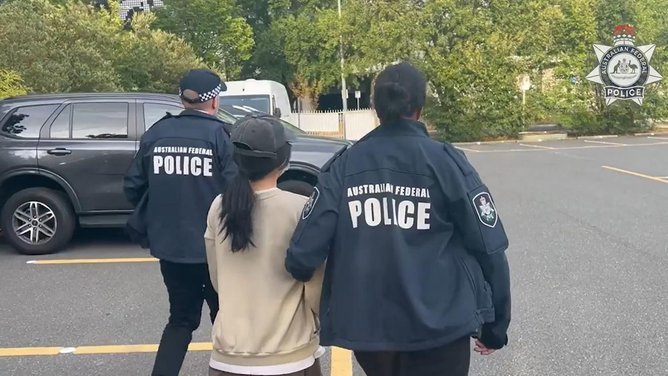
The pair, a 25-year-old man and a 31-year-old woman, had each been charged with one count of reckless foreign interference, the Australian Federal Police (AFP) said on Wednesday.
The offence carries a maximum penalty of 15 years’ imprisonment if convicted.
The pair worked with a woman who was charged in August 2025, under the direction of a Public Security Bureau in China, to covertly gather information about the Canberra branch of Guan Yin Citta, a Buddhist association, the AFP will allege.
The pair are expected to face the ACT Magistrates Court on Wednesday.
The man and woman are the fourth and fifth individuals charged with foreign interference offences since new laws were introduced in 2018.
An AFP investigation last July led to searches in the ACT in July 2025 and the arrest of a female Chinese national in August.
Further investigations resulted in the AFP arresting the man and woman earlier on Wednesday.
In separate investigations, a Victorian man was charged in November, 2020, and a NSW man was charged in April 2023.
AFP Counter Terrorism and Special Investigations Assistant Commissioner Stephen Nutt said foreign interference was a serious crime that undermined democracy and social cohesion.
“Australia is not immune to foreign interference, and we should not expect this arrest will prevent further attempts to target our diaspora communities,” Mr Nutt said.
“This is why the role of the Counter Foreign Interference Task Force is so important in investigating individuals and disrupting activities that undermine our democracy and social cohesion.
“It is important to note, one of the best defences to foreign interference is increased community awareness of the threat and the reporting of suspicious activity to authorities.
“Members of our culturally and linguistically diverse communities are more likely to be victims of foreign interference or transnational repression than to be offenders.

“The AFP cannot be everywhere at all times, and we rely on information from the public to supplement our own intelligence gathering and investigative efforts.
Meanwhile, ASIO Director-General Mike Burgess said foreign interference remained one of Australia’s principal security concerns.
“A complex, challenging and changing security environment is becoming more dynamic, diverse and degraded,” Mr Burgess said.
“Multiple foreign regimes are monitoring, harassing and intimidating members of our diaspora communities. This sort of behaviour is utterly unacceptable and cannot be tolerated.”
Anyone with information should contact the National Security Hotline on 1800 123 400.


