
Source : THE AGE NEWS
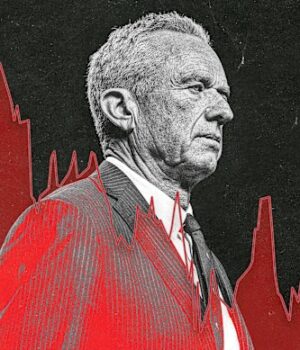
The worst US flu season in decades did not shield one of Australia’s largest companies, biotechnology firm CSL, from another brutal market response as vaccine scepticism from Trump administration Health Secretary Robert F. Kennedy Jr continues to reduce demand for its flu jabs.
It was one of the key issues that has halved its valuation since 2023 to as little as $73 billion on Wednesday. The group shocked investors by dumping its chief executive, then releasing December half-year results that fell short of market estimates and announcing $1.5 billion in writedowns, all within the space of 24 hours.
CSL shares plunged by as much as 12 per cent to an eight-year low of $150.16 after the company released accounts that showed an 81 per cent drop in first-half profit, and as its chairman and interim chief executive sought to explain its abrupt change in leadership.
The company began life as a Commonwealth-owned laboratory and became one of the Australian stock exchange’s great success stories over the past 30 years as it became a big player in blood plasma products and vaccines, but it has also been hurt by regulatory changes in China.
Net profit after tax fell to $US401 million ($566 million) for the December half year, hit by restructuring costs from its transformation announced last year and $US1.1 billion ($1.5 billion) worth of asset writedowns on different parts of its global business, including its vaccine division.
Shares had already fallen by 5 per cent on Tuesday afternoon after it botched the announcement that chief executive Dr Paul McKenzie was retiring with immediate effect that day. The stock was not in a trading halt when the announcement was made and dropped quickly amid chaotic trading.
“The results we’re presenting today represent a step in a broader transformation of CSL with the objective of delivering enhanced growth, profitability and shareholder returns,” CSL’s interim chief executive, Gordon Naylor, said on Wednesday.
He emphasised that his appointment will not be a passive one, and he will continue to drive the changes announced last year to cut up to 15 per cent of its workforce and rationalise its research and development centres. A decision to spin-off its vaccine business Seqirus, was withdrawn after vaccination rates in the US plunged following Kennedy’s appointment.
Chairman Dr Brian McNamee told investors in a late call on Tuesday the company had a sense of “urgency” as it looked to improve its performance and indicated McKenzie was not driving the change quickly enough.
“When the board sat down recently and looked at our business and thought about where we need to go in the future, we recognised he didn’t have the skills that we wanted for the future,” McNamee told analysts.
He also emphasised that the board was “not happy with the performance” of the group.
CSL shares dropped significantly last year, as investors were underwhelmed with its general performance, spooked by anti-vaxxer sentiment in its large US market, and US President Donald Trump’s threats to put tariffs of up to 250 per cent on pharmaceuticals.
McNamee said the double-digit decline in US vaccination rates was a shock to the group, given the declines already experienced over the previous two years, and it was yet to see a bottom to this vaccine decline.
CSL said in its results announcement that the writedown of its vaccines division was caused by a hit to the value of its coronavirus vaccine technology “driven by declining COVID disease burden and more onerous US regulatory requirements”.
On Wednesday, CSL indicated its US vaccine business was expected to decline further this year despite vaccination rates in most markets recovering to pre-pandemic levels.
Despite another brutal flu season, US immunisation rates will see a low to mid-single digit decline this season, according to CSL.
“Last year marked a 15-year high in influenza disease, and is currently trending to be an equally bad or even worse flu season … sadly, paediatric deaths are again on the rise, with the overwhelming majority of those deaths occurring in children who are either under or unvaccinated,” Dave Ross, head of vaccine maker Seqirus, told analysts and investors.
“As I’ve stated before, the science and the data will ultimately prevail. The public health consequences of influenza are just too big to ignore,” Ross said.
China has also hurt CSL because it has changed its rules to allow a plant-based version of a blood plasma product called albumin to be mixed with the traditional human blood-based equivalent produced by CSL, leading to a 27 per cent drop in its exports to the country.
The Business Briefing newsletter delivers major stories, exclusive coverage and expert opinion. Sign up to get it every weekday morning.
 Colin Kruger is a senior business reporter for the Sydney Morning Herald and The Age.Connect via email.

