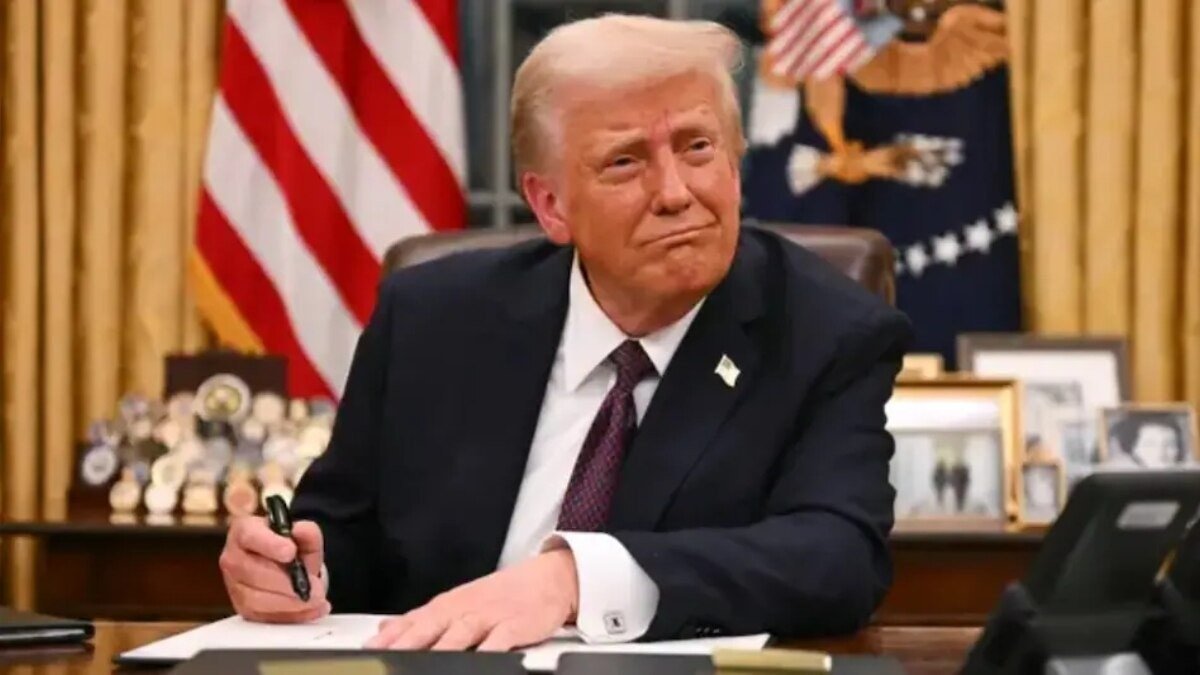
Source : INDIA TODAY NEWS
Donald Trump’s vision of reshaping global trade through aggressive tariffs was supposed to be his crowning achievement. Photo ops with world leaders, headlines screaming about historic victories, and pledges worth hundreds of billions painted a picture of American dominance restored. Yet barely months into 2026, that empire is crumbling spectacularly.
The South Korea debacle exemplifies the broader failure. Trump hailed a $350 billion investment pledge as proof of his negotiating genius, but the deal remains stuck in Seoul’s National Assembly amid political opposition and economic feasibility concerns. Rather than wait for ratification, Trump slapped 25 per cent tariffs on Korean imports, escalating from the previous 15 per cent cap. Hyundai shares dipped 4 per cent, the KOSPI fell 2.5 per cent, and American consumers now face thousands in additional costs for cars and electronics.
advertisement
This pattern repeats globally. China faces escalating duties that reached 145 per cent by April 2025, triggering Beijing’s retaliation with 34 to 125 per cent countermeasures and rare earth mineral bans. Phase Two trade talks have stalled indefinitely. India’s framework deal collapsed after Trump imposed 25 to 50 per cent tariffs over Delhi’s refusal to halt Russian oil purchases, straining both trade relations and strategic Quad cooperation. Japan’s temporary auto truce evaporated back to 25 per cent tariffs amid disputes over rice quotas and digital trade. Brazil retaliated with 50 per cent duties on American goods, targeting ethanol and beef exports.
The economic mathematics are brutal. Tariffs function as taxes on American importers, with 80 to 100 per cent of costs passed directly to consumers. Cars become £2,000 to £3,000 more expensive, electronics spike 15 per cent, and household bills rise by thousands annually whilst wages remain flat. American manufacturing relies heavily on foreign inputs, yet supply chains simply divert to Vietnam, Mexico, and other alternatives rather than returning home. Trade deficits remain stubborn, even growing, because tariffs cannot fix structural imbalances in savings and investment.
Retaliation erodes any temporary leverage. American farmers lose billions in export markets. Industrial sectors see margins shrink. Critical contracts like Korean shipbuilding for the US Navy face delays. Meanwhile, Trump’s insistence on applying tariffs to all countries breeds confusion, perceptions of favouritism, and legal uncertainty that undermines deal implementation before agreements even take effect.
Markets respond nervously to this chaos. Futures wobble, currencies fluctuate, and analysts note that whilst photo op deals signal toughness, the actual economics fail every test. Consumer costs rise, manufacturers complain, farmers brace for retaliation, and allies increasingly question American reliability.
The underlying problem is systemic. Tariffs cannot substitute for enforceable, properly ratified agreements. Trading partners endure economic pain more effectively than the United States, which faces immediate price spikes, supply chain disruptions, and inflation. The Supreme Court is reviewing Trump’s authority under trade law sections 301 and 232, threatening legal roadblocks to the entire strategy.
Strategically, tariffs fracture alliances precisely when America needs cohesion. South Korea explores diversification towards China and Russia. India balances American threats against economic interests. Japan grows cautious, Brazil retaliates aggressively, and Canada and Mexico navigate trade wars whilst domestic elections loom. American shipbuilding contracts tied to Korean yards face delays, indirectly benefiting China’s Belt and Road expansion.
Historical parallels reinforce the warnings. Trump’s first term saw similar patterns with KORUS renegotiation and steel tariffs that temporarily scored headlines but ultimately triggered retaliation and market volatility. The infamous Smoot Hawley tariffs deepened the Great Depression. The 2025 to 2026 cycle repeats these mistakes on a vastly larger global scale.
Globally, multipolarity accelerates as BRICS nations diversify away from dollar dependence, the EU and ASEAN carve alternative economic pathways, and major partners question Washington’s bargaining credibility. Tariffs meant to coerce cooperation instead incentivise independence.
Trump’s tariff empire reveals itself as more bluff than substance. Deals collapse post signature, ratification stalls, retaliation bites hard, consumers pay dearly, and strategic alliances fray. After a year of escalating duties, delayed agreements, and mounting costs, the question becomes unavoidable: were these tariffs ever genuinely beneficial for America, or simply an expensive illusion that undermined both economic prosperity and global standing?
– Ends
SOURCE :- TIMES OF INDIA