
Source : THE AGE NEWS
A comprehensive technical review by Locksley Resources, including the use of high-resolution underground mapping, has unveiled the potential for multiple antimony-bearing structures at its Desert Antimony Mine (DAM) in California, America’s most populous state.
The DAM is part of the company’s groundbreaking Mojave project in San Bernardino County. It sits directly adjacent to rare earths juggernaut MP Materials’ Mountain Pass operation – the only rare earths mine of scale in North America.
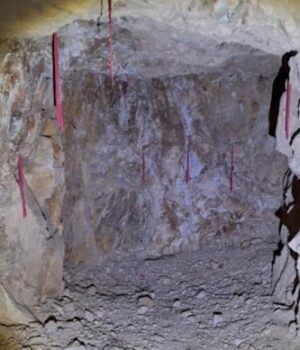
An underground mapping program at the DAM has unveiled the new Beefeater Shear, a major 10m – 15m wide north-south corridor between DAM and the company’s prospective Hendricks target.
Management says the Beefeater Shear mirrors the structural setting and alteration signature of the high-grade DAM system, ratcheting up the potential for significant new antimony discoveries at the project.
‘By mapping the underground workings at DAM, we have essentially ‘unlocked’ the geometry of the system.’
Locksley Resources managing director and chief executive officer Kerrie Matthews
The underground program has confirmed the geometry of the stibnite veins and offsetting structures, providing the company with valuable insights into how best to target the potential mineralisation at depth with its upcoming drill program.
The stage-three technical review focused on the Northern Block of the project and included high-resolution underground mapping at the DAM and regional structural analysis.
Notably, the structural observations indicate that pinched-out veins are not terminations. Instead, they appear to be cut off by locally offset blocks due to east-west shearing, which cross-cut and displace the primary north-south mineralised veins.
Locksley says the survey will allow the company to more effectively target the faulted extensions of the high-grade lodes by determining the exact displacement of the east-west shear zones. It will bolster drill planning and pave the way for possible vein extensions and resource expansion.
Locksley Resources managing director and chief executive officer Kerrie Matthews said: “The technical findings from this geological mapping campaign have significantly enhanced our exploration strategy at Mojave. By mapping the underground workings at DAM, we have essentially ‘unlocked’ the geometry of the system. We now see exactly how high-grade, mineralised blocks have been created by later structural events, allowing us to target extensions with greater certainty.”
Compounding the positive findings from the extensive review are the recent high-resolution radiometric survey results, indicating the potential success of planned target sampling and drilling across a suite of homed-in prospects.
The company believes the Beefeater Shear’s wide, altered and adjacent structure immediately to the west of the DAM, presents a compelling opportunity to put the pedal to the metal and beef up its exploration kit bag in search of multiple mineralised structures at the more than 40-square-kilometre project site.
Locksley conducted the bulk of the mapping south of its Hendricks prospect, discovering shear zones and quartz veins bearing the same geological stamp as those at the DAM. The north-south striking shear zones are parallel with the primary mineralised trends and show intense goethite alteration.
This is often a key indicator of weathered primary mineral sulphides.
Management says the mineralised system in the Northern Block may be greater than initially recognised, due to the identification of quartz-dominated shear-breccia veins. This can often indicate a hydrothermal event creating pathways that then localise high-grade antimony mineralisation.
Only last week, Locksley revealed impressive results from a recent batch- sampling program at its DAM prospect. These findings added to the previous 325-kilogram bulk sample, which produced a solid grade of 7.6 – 7.8 per cent antimony.
Initial flotation work then knocked out a premium grade 68.1 per cent antimony concentrate.
The latest sampling campaign pulled out a hefty 287 kilograms of antimony-rich material from historic underground workings, zeroing in on key zones to help fine-tune pilot plant design and squeeze the best possible metallurgical performance from the ore.
Eleven samples across three batches produced significant grades, including a peak grade of 26.1 per cent antimony in the second of the three batches, from high-grade material.
The total weighted average grade across all three batches was 18.7 per cent antimony, a substantial uplift on results from previous bulk samples.
The Desert Antimony Mine sits adjacent to the Mountain Pass mine, which produces the valuable light rare earths neodymium and praseodymium, key materials used in permanent magnets for electric vehicles, wind turbines, robotics and other advanced technologies.
With the United States scrambling to secure home-grown supplies of high-value rare earths, Locksley’s Mojave ground sits in prime territory to play a role in that push — especially if its upcoming exploration programs can quickly translate geological potential into tangible discoveries.
Is your ASX-listed company doing something interesting? Contact: mattbirney@bullsnbears.com.au


